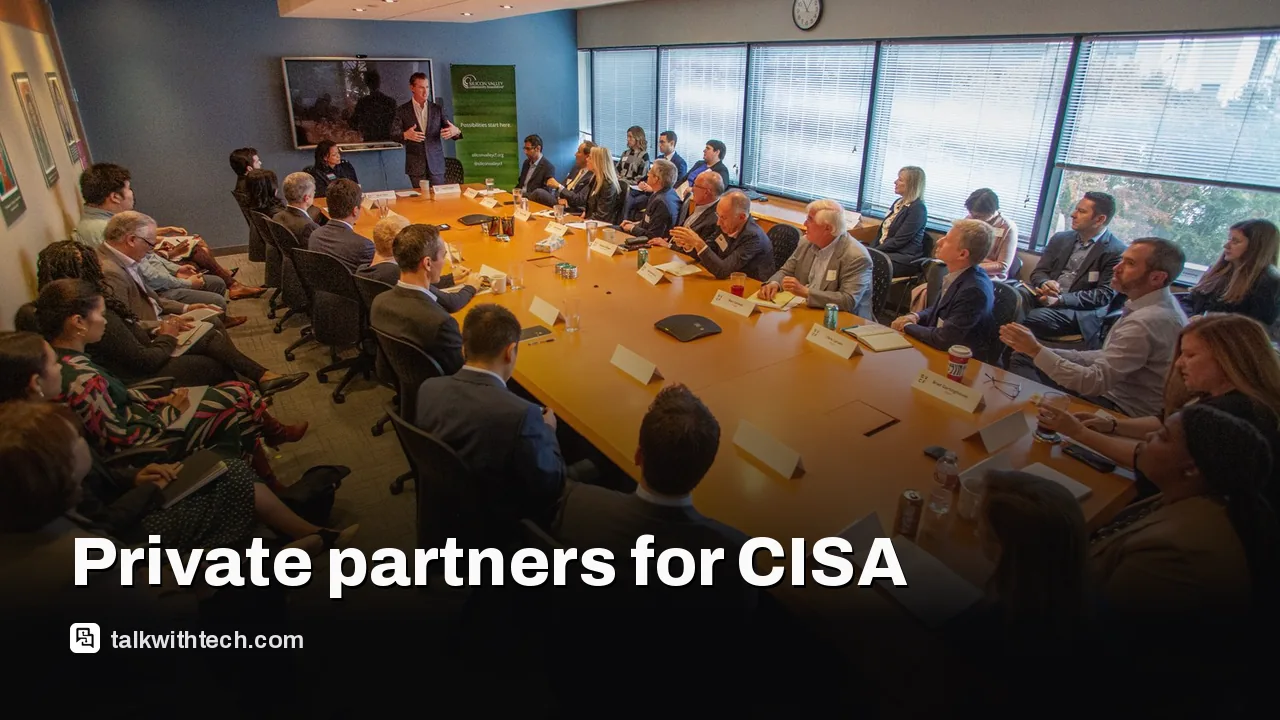
The U.S. Cybersecurity and Infrastructure Security Agency (CISA) is highlighting private partnerships in response to recent agency setbacks and staffing pressures.
The agency is signaling a strategy that leans more on external partners to defend critical infrastructure and respond to incidents.
Observers warn that reliance on private partners must be transparent and well-governed to avoid conflicts of interest and ensure accountability.
Quick read · 1 min
The director of the U.S. Cybersecurity and Infrastructure Security Agency (CISA) says private partnerships will be a bigger part of how the agency defends critical infrastructure. The idea is to tap private-sector expertise to speed up threat detection and incident response, especially where agency resources are stretched.
Public, transparent governance will be key. Experts warn that clear rules are needed to avoid conflicts of interest and to protect privacy as more private firms touch public systems.
What happens next? Look for details on partner selection, oversight, and pilot programs in different sectors.
The director of the U.S. Cybersecurity and Infrastructure Security Agency (CISA) is publicly championing private partnerships as a core part of the agency’s strategy after a stretch of organizational and operational challenges. The remarks come as the agency emphasizes collaboration with the private sector to defend critical infrastructure and speed up incident response.
Details on the timing or scope of these partnerships aren’t fully laid out in the initial briefings, but the tone is clear: public resources alone aren’t enough to keep pace with evolving threats. The agency appears to be steering toward a model where private-sector expertise, services, and tools help fill gaps left by budgetary and staffing pressures. Officials say such collaborations can accelerate detection, sharing of threat information, and coordinated response during major cyber incidents.
While private partnerships can bring necessary capabilities, several observers caution that governance matters. Questions include how partnerships are selected, how data is shared, and how accountability is maintained when private firms help run or secure public systems. Analysts say clear boundaries, documented protections for sensitive data, and independent oversight will be crucial to keeping public trust while leveraging external strengths.
The tension between speed and safeguard is familiar in public-private security programs. Proponents say working with industry can scale defenses faster and expose gaps that public teams might miss. Critics worry about potential conflicts of interest or the risk of outsourcing core national-security functions. The current discussion at CISA reflects that ongoing balancing act as the agency seeks to protect a broad set of sectors, from energy and water to transportation and digital services.
In practical terms, what this means for everyday Americans is more about the systems in place behind the scenes. If successful, private partnerships could mean quicker warnings about vulnerabilities, faster incident containment, and better sharing of best practices across critical infrastructure sectors. If not carefully managed, the risk is uneven protections or uneven accountability between public and private partners.
01
What happened to trigger the talk of partnerships
The catalyst for the current push appears to be a series of internal and external pressures on CISA, including the challenges of coordinating with multiple stakeholders and maintaining rapid incident responses in a shifting threat environment. While specifics aren’t spelled out in all public statements, the direction is unmistakable: leverage external resources to bolster core capabilities when agency resources are strained.
02
How private partnerships would work in practice
Details are still being worked out, but the guiding idea is to formalize collaborations with vetted private-sector entities that bring specialized security tools, threat intelligence feeds, and rapid-response capabilities. Expect joint exercises, shared dashboards for risk visibility, and standardized processes to ensure that private partners operate under clear rules and reporting requirements.
03
What it means for everyday users
For most people, the impact is indirect but meaningful. Broader cooperation could mean faster detection of breaches affecting consumer services, quicker advisories during cyber incidents, and better resilience of critical utilities you rely on daily. The caveat is to watch for transparency and privacy safeguards as more private actors touch public systems and data flows.
04
What happens next
Public statements suggest a continued push toward formalizing and expanding private-sector collaboration, with further details to follow as policy makers and agency leadership finalize governance frameworks. Expect future announcements outlining partner criteria, oversight mechanisms, and initial pilot programs in select sectors.
What is driving CISA to seek private partnerships?
The agency cites staffing and resource constraints alongside evolving threats that require faster, broader collaboration to defend critical infrastructure.
Will my data be shared with private companies?
Any data-sharing plans would be subject to governance rules and privacy protections; specifics haven’t been made public yet.
U.S. prosecutors say North Korean operatives recruited Americans to help breach U.S. companies, with authorities seizing hundreds of laptops in Texas as part of the investigation.