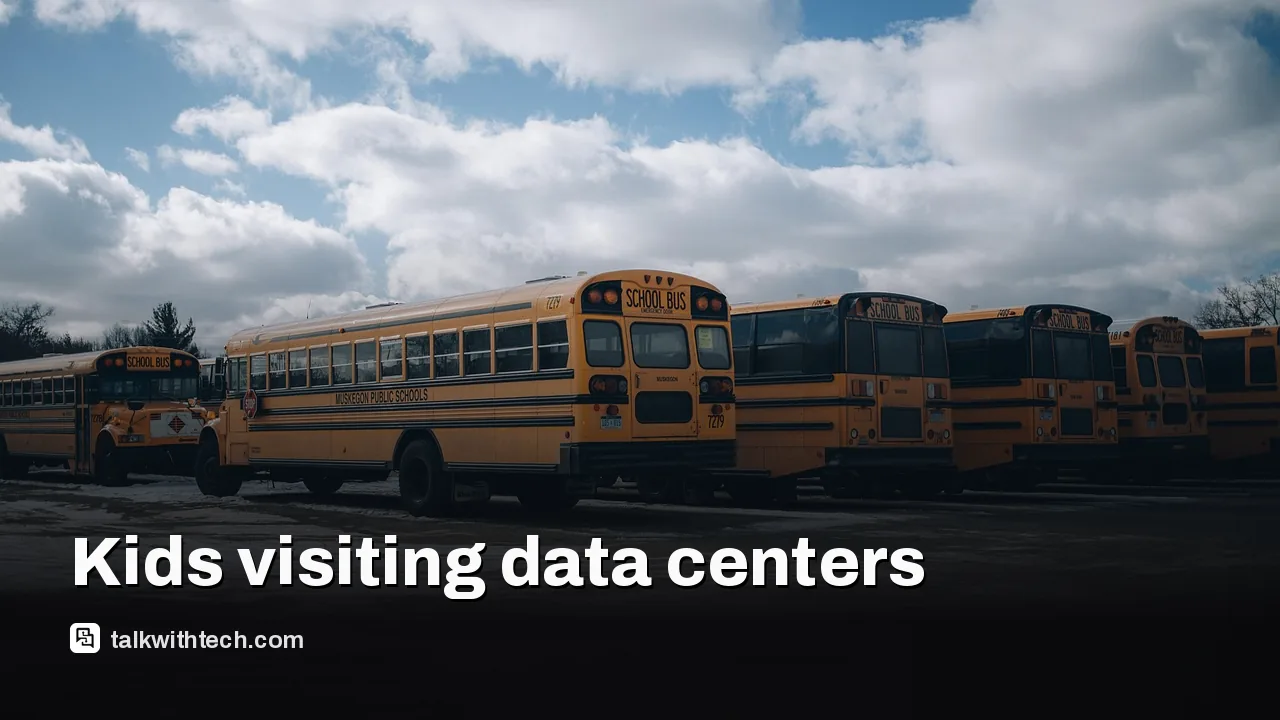
Industry groups are using school field trips to promote data centers as essential, “mission critical” infrastructure.
A network of field trips and classroom activities has grown since 2025, reaching hundreds of students across multiple districts.
The move aims to shape younger generations' views on data centers, energy use, and job opportunities in tech infrastructure.
Quick read · 1 min
Data centers are broadening their public image by taking students on field trips and providing kid-friendly materials. The goal is to frame data centers as essential infrastructure with good careers and reliable services.
Why it matters: for families, this shapes how you think about energy use and local jobs tied to these centers. If you’re curious, ask teachers what students learned and whether independent voices were included.
What’s next: more schools may host trips and use lesson kits about data centers, cloud computing, and engineers. Teachers should look for standards-aligned materials and balanced context.
The data center world is pitching its story directly to kids. A nonprofit group and several industry associations are pushing school field trips, classroom activities, and kid-friendly reading to help the public see data centers as essential infrastructure you rely on every day.
The effort centers on the 7×24 Exchange International and similar groups, which argue that data centers are mission critical. Their strategy includes everything from storybooks about a data center to tours for students at local facilities. The goal, they say, is to build a future pipeline of workers while painting a more positive public image of what can be an energy-hungry industry.
In practice, the push is already visible. Since 2025, at least eleven companies and industry groups have hosted field trips to local data centers. One example highlighted by the industry involves high schools in the DC metro area visiting a central data center campus. Another instance saw a company open a community space focused on cloud computing and future job possibilities to nearby schools. The idea is to show students what data centers do beyond the obvious online services, storing, processing, and protecting information around the clock.
Public relations efforts like these raise questions about energy use, efficiency, and equity. Communities located near large data centers often weigh concerns about power consumption and cooling needs. Proponents say the outreach helps demystify the work and demonstrates the jobs that data centers create, from engineering to operations. Critics, however, worry that school trips may sugar-coat the environmental footprint or oversell the benefits without enough context.
01
Who is behind it and why now
The driving force behind the field trips and kid-friendly materials is a blend of industry groups and employers seeking to diversify the talent pool and improve the industry’s public image. The nonprofit network 7×24 Exchange is named as a key organizer, along with individual companies that run or host data centers. Their outreach often includes activities that are easy for classrooms to replicate, such as coloring pages about data centers, simple science experiments, and printed stories about a “data center superhero.”
Educators and researchers say the approach isn’t new in theory. They’ve seen similar efforts from other industries with image problems, who try to shape younger audiences’ understanding early. The question now is whether these activities provide useful, balanced information or merely present a curated version of what data centers do and what they cost the community in energy and land use.
02
What it means for families and students
For families, the practical question is what students take away. The materials and field trips aim to explain in kid-friendly terms how data centers keep online services running, why energy efficiency matters, and what kinds of jobs exist in the sector. If your child participates in a field trip, expect a mix of hands-on activities and simple explanations about servers, cooling, and the people who keep digital services online.
Administrators weighing these programs will look at whether the trips align with science and career education standards, and whether there’s transparency about energy use and local impact. It’s also reasonable to ask how the schools verify the information and whether independent voices are included to provide context about environmental concerns or land-use trade-offs.
03
What happens next
As field trips and classroom kits become more common, schools and districts will likely establish more partnerships with data center operators and industry groups. Look for a growing catalog of teacher guides, student activities, and possibly more tours aimed at different age groups. If you’re curious, ask your school district whether they’ve hosted or planned visits and what kind of follow-up material they provide to accompany the trip.
Jensen Huang describes Microsoft’s Surface Laptop Ultra as a long-delayed, AI-ready PC built with Nvidia’s tech, signaling deep collaboration between chipmakers and PCs.