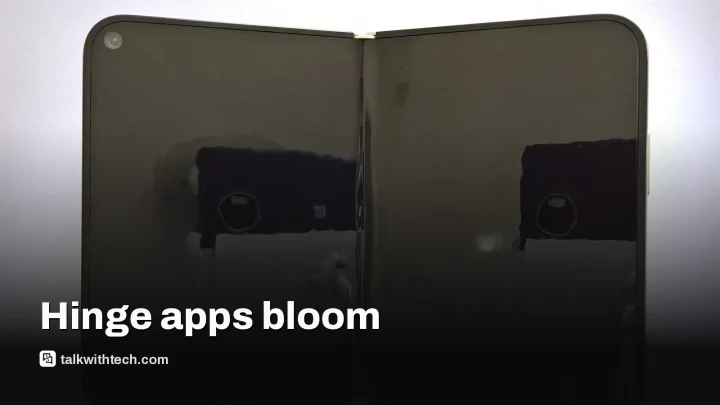
Non-US brands are positioning foldable phones to rival Apple’s rumored iPhone Duo.
Competitors highlight lighter designs, bigger inner displays, and strong cameras.
Prices show a mix of regional availability and currency differences, with US timing still unclear.
Quick read · 1 min
Non‑US brands are aiming to beat Apple’s upcoming iPhone Duo in the foldable phone space. Competitors such as Xiaomi, Oppo, and Motorola are rolling out devices with large inner displays, strong cameras, and long battery life. In US stores, foldables from rivals can run about $1,490 to $1,900, depending on the model. Apple’s Duo is still awaiting official US pricing and release details.
What this means for you is simple: if you want a foldable now, there are several solid options with different strengths. When the Duo arrives, expect comparisons that weigh software features against hardware tricks.
Lightweight designs for easier one‑hand use
Big inner screens for media and multitasking
Battery life and charging speed vary by model
A wave of foldable phones from non‑US brands is stepping up as a real challenge to Apple’s anticipated iPhone Duo. While Apple has not shared a US release price for the Duo, manufacturers like Xiaomi, Oppo, Samsung and Motorola are already pushing into the foldable segment with devices designed to appeal to shoppers keeping a close eye on price, weight and camera options. In the US, Samsung’s latest foldable entry is priced around $1,900, while Oppo and Motorola are offering competitive options that show how the market could shake out once the Duo lands stateside. These rivals are betting on a mix of lighter designs, larger inner displays and practical features to lure buyers who want a foldable that works well as a daily phone and a mini tablet.
The foldable market has been expanding for a few years, but the pace has picked up. Xiaomi’s 18 Fold is already on the radar in markets outside the US, and it starts at 10,999 yuan in China, roughly $1,640 by current exchange estimates, though a global model is said to exist. Oppo’s Find N6 emphasizes thinness and large battery life, with a 6,000mAh pack and 80W wired charging. It starts in China at 9,999 yuan (about $1,490), and a global model is said to be coming but not officially for the US. Motorola’s Razr Fold brings a classic flip‑style hinge into a foldable with an 8.1‑inch inner screen and a bright display, with a price around $1,900 in US stores and a stylus option as an add‑on.
Indeed, the race isn’t just about prices. Review chatter for these devices has often focused on how foldables handle showtime viewing, multitasking, and camera versatility in a pocketable form. The iPhone Duo is expected to bring Apple software optimizations for foldables, including new usage modes and smoother transitions between displays, according to early previews. Whether Apple’s approach will outpace broader hardware competition remains to be seen, but the current lineup proves there’s no shortage of ways to mix compact design with a big, flexible screen.
01
Which phones are pushing the iPhone Duo’s envelope
Several big names are already offering foldables or near‑foldable designs that could siphon early attention away from Apple. Xiaomi’s 18 Fold aims to match the Duo’s passport shape, with a 7.6‑inch inner screen and a 5.4‑inch outer screen. Oppo’s Find N6 trades some of the square‑edged look for a thin, sleek body and a sizable 6,000mAh battery. Motorola’s Razr Fold sticks to a more traditional flip form but still folds into a compact footprint with a bright inner display and strong charging specs. The US pricing for these rivals sits in the $1,490 to $1,900 range depending on model and retailer, illustrating a healthy spread that could pressure the Duo on both value and performance.
02
What this means for everyday users
Here’s the practical takeaway: if you’re curious about foldables, you’ll soon have several real options at slightly different price points. Lighter designs could make one‑hand use easier, while bigger inner displays help with reading and video. Battery life varies by model, but several of these devices pack large cells intended to keep you going through a busy day. For most shoppers, the big question is whether Apple’s Duo will deliver software tricks that truly justify a foldable form factor, or if a fellow traveler in the pocket can match those features at a lower price.
03
What happens next
Apple hasn’t published price or availability for the Duo in the United States yet, so these rivals will likely keep pressing their advantage in the meantime. If you’re in the market for a foldable now, you have choices that offer strong cameras, substantial battery life, and distinctive designs. When the Duo does arrive, expect hands‑on reviews and comparisons that weigh build quality, software responsiveness, and overall value against these competing devices.
There is no official US release date or price for the Duo in the information available here. Expect further details from Apple when they announce specifics.
Which foldable is cheapest in US stores right now?
Prices vary by model and retailer, but Samsung’s latest foldable options are commonly cited around $1,900 in US stores.
Do these rivals offer better cameras or battery life?
Each model highlights different strengths: some focus on bigger batteries and charging speed, others on lighter weight or camera versatility. Real-world performance will depend on software integration and displays.
Amazon shifts its tablet strategy to stock Android, adds Google Play, and positions three Alexa Tablets as affordable alternatives to the iPad. Here’s what it means for everyday users.
4 min read
We use cookies to understand how readers use Talk With Tech, so we can make it better. Is that OK? Privacy policy
The Daily Brief
Today's biggest tech stories, in 5 minutes
Every morning, the news that matters from AI, phones, apps and the people shaping tech. Explained in plain English. Free.
One email a day. No spam, unsubscribe anytime. Privacy policy