Galahad AI memory SSD claims 14x speed when it reads far less text
Corbenic AI says its Galahad system can cut how much a GPU rereads text by storing model state on local NVMe storage, promising big gains for data centers. Here’s what that could mean for everyday users.
Corbenic AI introduces Galahad, a system that saves a model's KV cache to encrypted local storage to avoid rereading text on GPU memory reloads.
The claimed 14x speedup largely comes from reading less text, not simply loading saved state, and targets data centers using GPU memory for AI workloads.
The approach competes with existing KV cache strategies and open-source tools, with caveats around text length, storage latency, and restart scenarios.
What this could mean for consumers is more efficient AI services on the back end, potentially lowering latency and energy use for server-side AI tasks.
Quick read · 2 min
Corbenic AI says its Galahad system lets a GPU skip rereading text by saving the model’s working memory to a local SSD. The result sounds impressive, up to 14x faster recall in their tests, but the number hinges on how much text the system can trim with another component called Blaise. The approach competes with existing memory tricks that push KV caches into CPU memory or disks, and it requires encryption and careful fault handling.
For data centers, the potential benefit is simpler: faster AI responses and lower energy use, especially for large models that chew through prompts and long documents. For everyday users, that could mean snappier chatbots and search tools powered by AI backends that run more efficiently.
Next steps look to broader pilots and clearer performance benchmarks across more workloads. Whether Galahad becomes a standard option will depend on real-world testing and how much deployment complexity providers are willing to accept.
The big claim from Corbenic AI is simple to understand but hard to verify in the wild: if a GPU forgets the exact memory state after a restart or memory purge, it can re-read a lot of the document text. Corbenic says its Galahad system saves the model’s key-value (KV) cache to encrypted local storage and reloads it when the same input reappears. The result, the company argues, is the GPU doing less work and answering faster, with a published beta starting October 1, 2026.
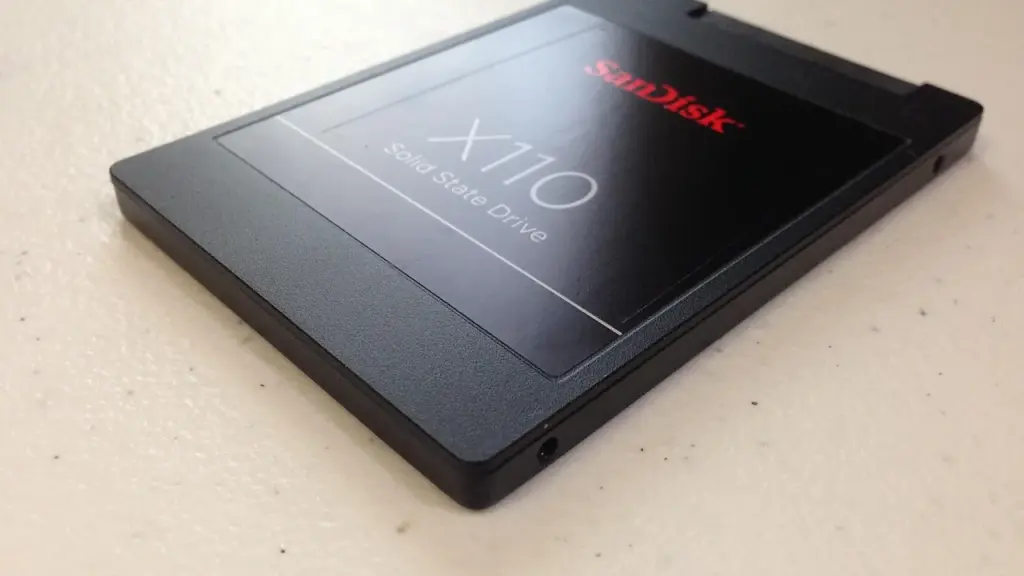
In plain terms, Galahad turns your server’s NVMe drive into part of the AI’s memory. The “GPU never reads the same text twice” line is how founder and CEO Sietse Schelpe describes it. The trick is to write each block of a prompt’s state to disk and then pull it back up when the same bytes show up again, avoiding the expensive step of recomputing attention from scratch.
Corbenic concedes the headline number, 14x speedup, depends on the specifics of the setup and workload. Its own tests show a recall scenario where a 96,726-token list with 100 facts was processed on a 31B model, yielding a 0.59 second per-question recall when using the Galahad plus Blaise components. But the same paper notes that much of that advantage comes from Blaise, which trims the amount of text the model needs to attend to at any one time, not just the speed of loading from disk.
The broader context is a crowded field of memory-management approaches for AI. Nvidia’s Dynamo framework stacks memory across GPU, CPU and local storage; open-source tools and competitors have experimented with storing KV caches in CPUs, local disks or remote storage to speed up inferencing and reduce GPU pressure. Corbenic’s edge is a tight, end-to-end library that aims for a “fail-closed” rule: if the stored memory can’t be trusted, the system falls back to recomputing rather than risking wrong results.
Still, questions remain. How does Galahad perform with long-running models, larger prompts, or in highly concurrent data-center workloads? How much latency does the encryption and verification add? And how do enterprises weigh the gains against the cost of implementing a new KV-storage layer alongside their existing AI stack?
Corbenic isn’t asking data centers to rip out GPUs or memory; it’s offering a layer that could make the same hardware work harder and more efficiently by cutting redundant reads. If the beta scales as promised, it could become attractive for organizations already sprinting to squeeze more performance from their current AI servers.
What’s next: Corbenic plans to continue refining Galahad, with a focus on making the system easier to deploy on common Linux-based AI stacks and clarifying performance gains across different model sizes and datasets.
01
What this means for everyday AI users
For users, the practical impact is rarely a single breakthrough feature. More efficient AI memory handling could translate into faster answers and lower cloud costs when you’re running large language models on back-end services you rely on, think chatbots, writing assistants, and search tools. The effect is indirect but potentially meaningful if Galahad helps providers serve AI responses with lower latency and energy use.
02
How it compares with existing memory tricks
Galahad sits alongside other approaches that push KV caches into CPU memory, local disks or remote storage. The key question is whether the added complexity of encryption, fault checking and memory-miss handling pays off in real workloads; Corbenic argues it does by reducing the need to recompute the model’s attention from scratch after every restart.
03
What happens next
If Galahad proves scalable in broader tests, expect more data-center pilots and public benchmarks. In the meantime, it’s a reminder that the bottlenecks in AI aren’t just bigger models or faster GPUs, but smarter ways to manage data so the hardware spends less time re-reading what it already knows.
An older Intel Core i5-4670K joins the record books after an aggressive overclock using liquid nitrogen cooling, delivering a standout Cinebench R11.5 result.