Cinebench overclock i5-4670K breaks 12-year multicore record
An older Intel Core i5-4670K joins the record books after an aggressive overclock using liquid nitrogen cooling, delivering a standout Cinebench R11.5 result.
Talk With Tech Newsroom
The short version
An Intel Core i5-4670K overclock achieved a Cinebench R11.5 multicore score that breaks a 12-year record.
The setup used a Haswell-era motherboard and modest DDR3 memory, with liquid nitrogen delivering extreme cooling.
This shows retro hardware can still surprise when pushed with careful tuning and proper cooling.
The result is a reminder that benchmarks measure repeatable performance, not daily-use speed for most people.
Quick read · 1 min
An Intel Core i5-4670K has reportedly topped a Cinebench R11.5 record after being cooled with liquid nitrogen. The setup uses a Haswell-era motherboard and modest DDR3 memory, highlighting that old silicon can surprise with the right methods.
Benchmarks help quantify performance in a repeatable way. This isn’t about everyday speed, but about what extreme cooling and precise tuning can achieve on vintage hardware.
What happens next? The community will debate stability and the practicality of LN2 tweaks on older CPUs, while readers can take away a lesson in patience and precision when experimenting with legacy hardware.
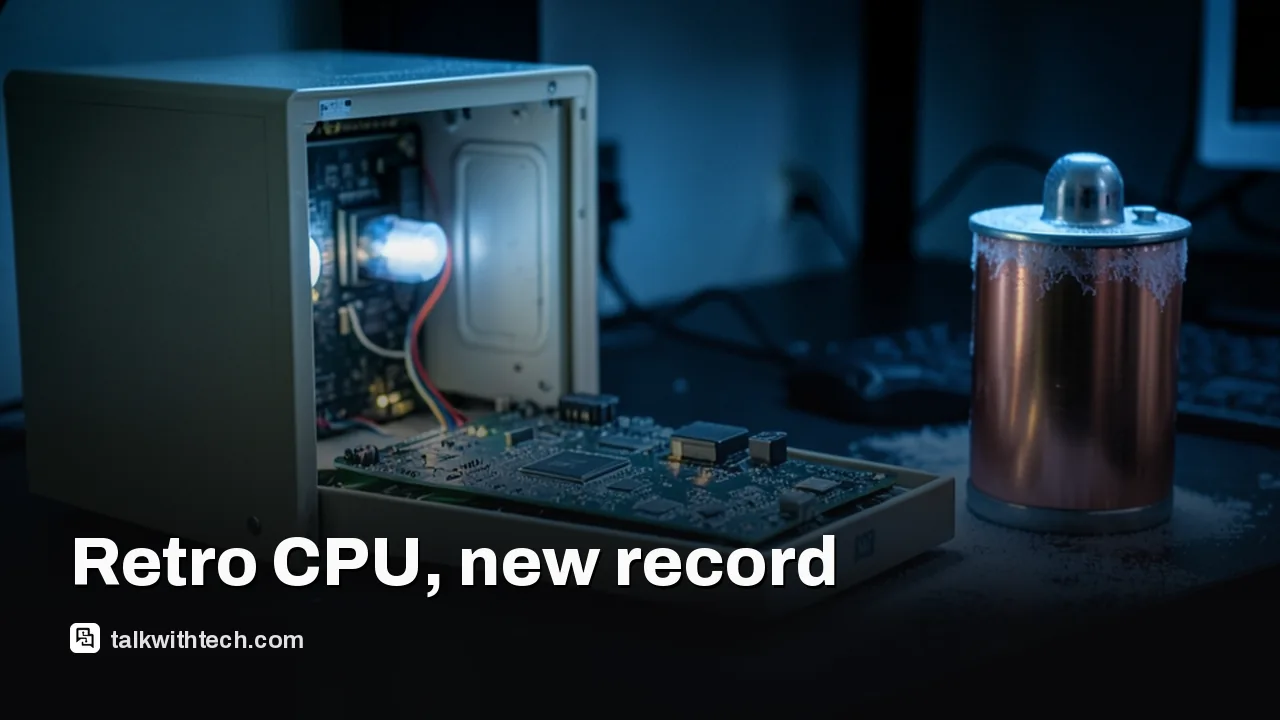
Brace yourself for a throwback triumph. An enthusiast nicknamed Luumi just topped a Cinebench world record that stood for 12 years using an older Intel Core i5-4670K, cooled with liquid nitrogen and paired with a modern Haswell-era motherboard. The exact numbers aren’t the headline here; the important bit is the multicore score in Cinebench R11.5 that surpassed the previous top in its category.
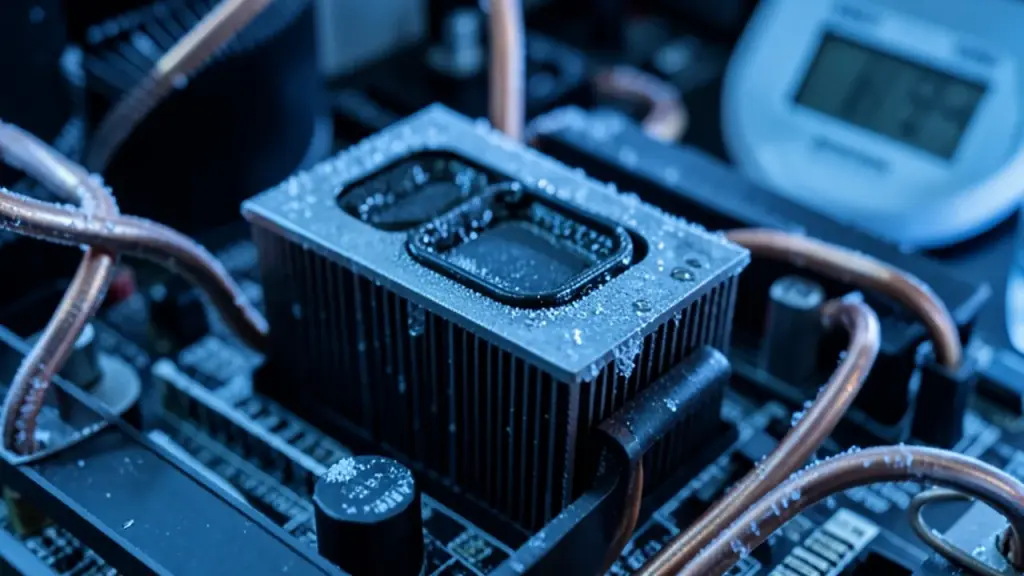
That single figure doesn’t tell the whole story. This isn’t about chasing the latest gear. It’s about how extreme cooling and careful tuning can coax outsized gains from vintage silicon. The setup included an ASRock Z97 OC Formula motherboard, 4GB of DDR3 memory, and a high-end power supply. Liquid nitrogen was used to chill the CPU enough to run at speeds far beyond stock, allowing a validation run that set a new benchmark for this particular chip and configuration.
It’s a niche achievement, yes. Cinebench R11.5 is an older benchmark, and the record refers specifically to the Core i5-4670K category. The Haswell-era chip was never meant to be the fastest in a modern data center, but with the right cooling and power delivery, it can still demonstrate impressive raw capability. This kind of result is a snapshot of how far enthusiasts will push hardware in pursuit of benchmarks, not a prediction of everyday performance.
So what does it mean for the rest of us? For one, benchmarks exist to give a repeatable way to compare hardware. A record like this shows what’s possible when you tune and cool components with care, rather than what most people will experience in daily use. It’s also a nice reminder that the thrill of hardware tinkering can keep older parts relevant in demonstrations and education.
What happens next? The HWBot community will likely discuss the stability envelope and the practical limits of LN2 cooling on older CPUs, along with how such experiments should be validated. For readers, the takeaway is simple: you’re unlikely to replicate this at home, but you can learn from the approach, precise voltage control, careful thermal management, and rigorous validation practices.