Kilauea has had three lava fountain events since 1823, with new research detailing the patterns behind them.
After the 2018 eruption, refill of underground magma reservoirs increased, speeding up surface inflation.
By 2023, inflation extended to a nearby caldera, contributing to later fountain activity.
Combining seismic, gas, and surface data helps scientists forecast when fountains may erupt and issue warnings.
Quick read · 1 min
Scientists are increasingly able to explain why Hawaii’s lava sometimes erupts in dramatic fountains at Kilauea. By watching seismic signals, gas emissions, and ground movement, they’ve linked a faster refill of underground magma reservoirs to more explosive surface activity.
This matters because better monitoring leads to earlier warnings and safer planning for locals and tourists alike. The researchers plan to keep refining their models to turn data into more precise eruption forecasts.
Combining sensors, gas meters, and cameras improves understanding
Faster magma refill can drive fountain eruptions
Early warnings help protect people and property near volcanic activity
Researchers are shedding light on why Hawaii’s lava occasionally erupts in spectacular fountains instead of quiet lava flows. The focus is Kilauea, Hawaii’s most active volcano, where three fountain-style eruptions have been documented since 1823. The new work looks at how underground magma stores refill and how surface inflation signals those refill cycles, helping scientists anticipate when a fountain might occur.
The study blends decades of monitoring data to map how magma moves from deep reservoirs to the surface. After a major 2018 eruption partly drained one underground chamber, refill and surface inflation accelerated. By 2019, the ground around the volcano began to rise steadily, and by 2023 that inflation had intensified and spread to a nearby caldera. Those pressure changes are what produce the dramatic fountains seen in some eruptions, as gas-rich magma bursts into eruptive vents with enough force to shoot lava high into the air.
01
What a lava fountain actually is and why it happens
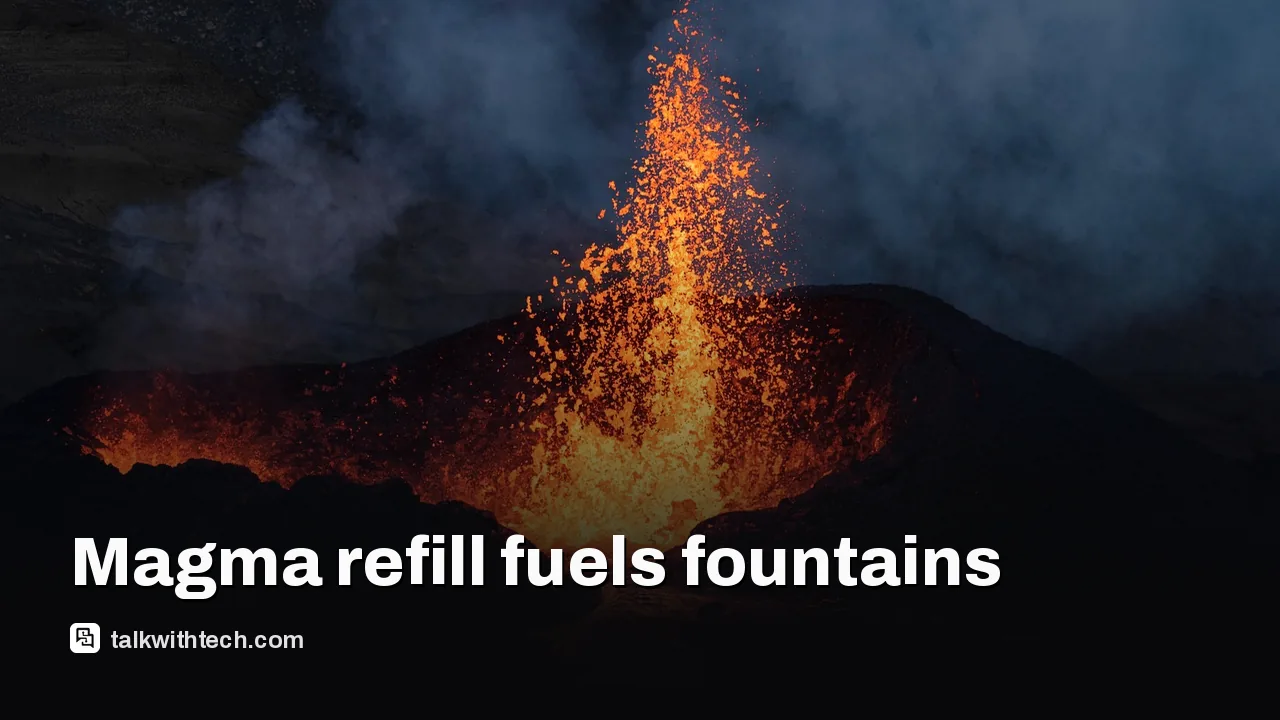
A lava fountain is when magma erupts from a vent in a jet that shoots upward rather than a slow lava flow. The height and vigor depend on how much magma is available, how easily gas can escape, and how connected the underground reservoirs are to surface vents. When magma holds more dissolved gas and pressure builds, fountains can rise hundreds of meters into the air.
02
Why this matters for Hawaii and nearby areas
Understanding fountain behavior helps authorities forecast eruptions and issue warnings earlier, which can protect residents and visitors. It also informs land-use planning around known vents and calderas, and guides safe routes for people who hike near volcanic areas.
03
How scientists track these changes
Researchers rely on a toolkit that includes seismic sensors to hear rock movements, instruments that detect gas emissions, and surface measurements that show how the ground is deforming. Cameras and other monitoring gear capture real-time changes on the volcano’s surface. By correlating these signals, scientists can infer how magma moves through the network of underground pockets to the surface.
04
What this means for everyday life
For locals and travelers, the practical upshot is improved forecasts and clearer warnings during periods of heightened activity. If you’re visiting Kilauea, pay attention to official advisories and avoid areas near vents or newly inflated ground. For residents, better understanding of refill dynamics helps with safety planning and evacuation readiness if conditions shift suddenly.
Researchers say they’ll keep monitoring to refine how refill patterns relate to eruption styles. The aim is to turn more measurements into sharper predictions about when and how high a fountain might go, which could translate into more accurate alerts for nearby communities.
06
Quick answers
What triggers Hawaii’s lava fountains?
Gas-rich magma under pressure and the way underground reservoirs refill influence whether a fountain erupts and how high it shoots lava.
Why now is this important?
Knowing refill dynamics helps scientists forecast eruption styles and improve early warnings for people living near Kilauea and visitors to the area.
Spanish researchers uncovered 597 wooden Neanderthal tools preserved as hollow molds in mineral crusts, revealing everyday woodworking over 20,000 years.