Apple launched the iPhone 4S on October 14, 2011, ten days after its announcement, and started selling it in multiple countries.
The standout feature was Siri, Apple’s built-in voice assistant able to perform tasks through natural language.
The iPhone 4S carried the same glass-and-stainless-steel design as the iPhone 4, but with internal improvements and enhanced camera specs.
US prices at launch started at $199 for 16GB, $299 for 32GB, and $399 for 64GB with a two-year contract.
Quick read · 1 min
The iPhone 4S launched on Oct 14, 2011, and brought Siri to the iPhone for the first time. It kept the familiar design but added better internals and an improved camera. In the US, pricing started at $199 with a two-year contract for the 16GB model.
Why it matters: Siri popularized voice assistants on smartphones, helping turn the phone into a hands-free helper for everyday tasks. That idea has grown into the standard AI features we expect on phones today.
What happens next: Apple and rivals continued to push smarter assistants, broader language support, and deeper app integration, shaping how we interact with our devices every day.
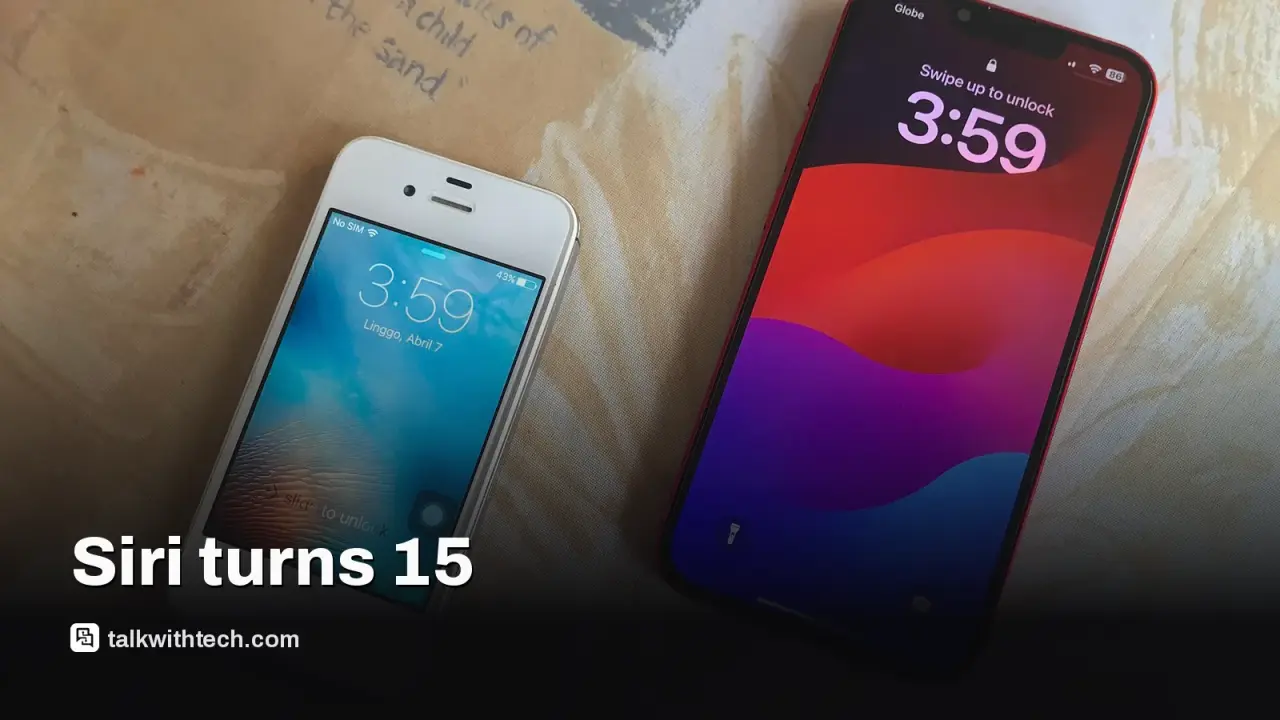
Today marks the 15th anniversary of a device that quietly reshaped how many of us use our phones. Apple launched the iPhone 4S on October 14, 2011, with sales beginning in the United States and several other countries about a week later. It kept the familiar glass-and-stainless-steel look of the iPhone 4, but underneath it added a handful of upgrades that would become standard in later models.
The big moment in the 4S era was Siri. For the first time, iPhone owners had a built-in voice assistant that could place calls, send messages, set reminders, search the web, and answer questions using natural language. Apple billed Siri as a smarter, context-aware helper that could understand everyday requests, like asking for the weather and getting a forecast. It wasn’t just a novelty; it started to redefine how people interacted with their devices, moving toward more conversational, hands-free use cases that are now common across smartphones.
Inside, the 4S brought notable improvements without changing the design. It retained the iPhone 4’s glass-and-stainless-steel frame, but added internal upgrades that delivered faster performance and better imaging. At launch, Apple offered the 4S in 16GB, 32GB, and 64GB configurations. In the United States, the starting price was $199 with a two-year carrier contract, climbing to higher tiers for more storage. Those numbers reflect a moment when smartphones still carried substantial carrier subsidies, a practice that has faded in many markets but colored how people bought devices at the time.
Beyond Siri, the 4S helped set a trajectory for future iPhones. It helped anchor the idea that a phone could be both a personal assistant and a portable tool for work, photography, navigation, and entertainment. The device’s reception helped Apple push forward with features that would grow into broader ecosystems, things like app integration, voice-driven tasks, and more capable cameras, that we now take for granted in modern smartphones.
01
Why this matters to today’s readers
Anniversaries like this show how quickly a technology that feels ordinary today was once a novelty. Siri’s debut demonstrated the value of voice assistants in everyday life, a concept that’s evolved into the way many people manage schedules, send messages, and control smart devices. For non-tech readers, it’s a reminder that today’s AI helpers and voice commands trace back to earlier experiments that proved people wanted to talk to their phones and get quick, useful responses.
02
What changed after the iPhone 4S
The iPhone 4S didn’t reinvent the wheel overnight, but it accelerated adoption of hands-free features and voice-driven tasks. Over the years, Apple expanded Siri’s capabilities, expanded languages, and integrated the assistant deeper into iOS, eventually weaving it into smart home controls, app experience, and more. The 4S thus helped establish a model where the best smartphones aren’t just powerful chips and cameras, they’re daily partners that understand spoken requests and help you get things done with minimal effort.
03
What this meant for Apple and the market
Introducing Siri helped Apple differentiate the iPhone at a crowded time in the smartphone market. It also set expectations that voice assistants should be accessible from the moment you unlock your phone, not as a separate app or add-on. The idea of an always-present helper gradually influenced other platforms as well, nudging competitors to invest in voice interfaces that could handle simple tasks without touching the screen.
04
What to watch next
As smartphones continue to weave more AI into daily life, many users now expect hands-free help, smarter recommendations, and more capable on-device processing. The iPhone 4S anniversary is a reminder that behind every new assistant feature lies a longer line of iterative improvements, from better speech recognition to more natural-sounding responses and deeper privacy protections.
The big addition was Siri, Apple’s built-in voice assistant, plus internal improvements over the iPhone 4.
How much did the 4S cost at launch?
In the US, it started at $199 with a two-year contract for the 16GB model.
What happens next: Apple eventually expanded Siri to more devices and languages, and today many smartphones include similar voice assistants as a core feature.