Neutron rocket delay explained: voids in carbon tanks force fix
Rocket Lab confirms another hold on its medium‑lift Neutron rocket due to manufacturing issues with carbon composite tanks, pushing first flight into 2027.
Talk With Tech Newsroom
The short version
Rocket Lab confirms the Neutron medium‑lift rocket won’t fly until 2027 due to a manufacturing issue with carbon composite domes in the first‑stage tanks.
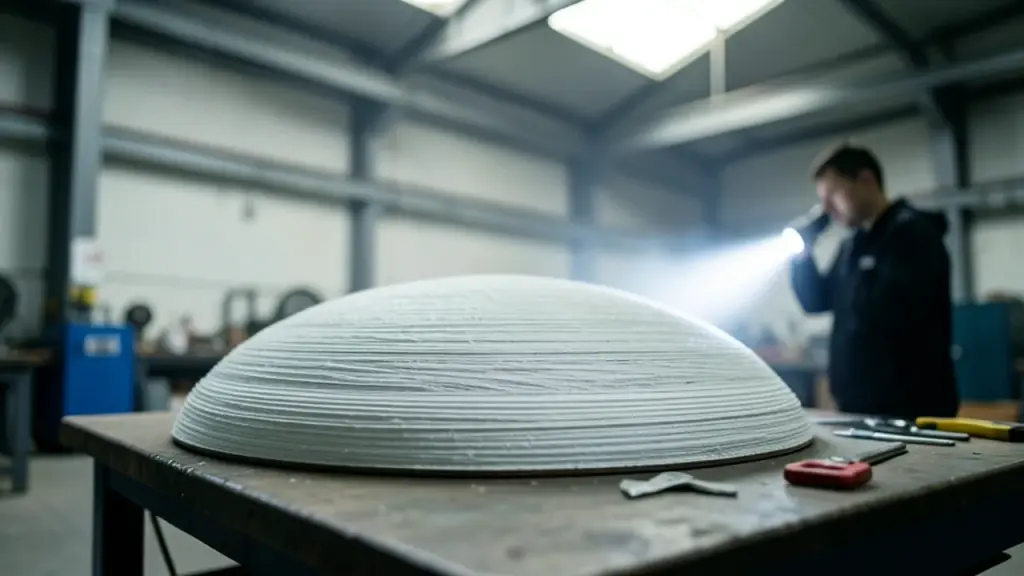
The flaw involves voids in carbon fiber layers, a manufacturing challenge that becomes harder to manage at large scales than with traditional metals.
CEO Peter Beck said the issue was identified in a video and that the company will pause production to investigate and fix the domes before moving forward.
Quick read · 1 min
Rocket Lab has delayed the Neutron rocket’s first flight to 2027 after discovering a flaw in the carbon composite domes used for the first‑stage tanks. Voids in the carbon fiber layers are the trigger, and fixing them requires a careful restart of part of the production line.
The setback affects not just development timelines but also customers counting on a reliable mid‑lift option for satellites and other missions. Engineers must validate a revised manufacturing process and conduct extensive tests before flight hardware can be cleared for rollout.
What happens next: Rocket Lab will pause production, refine the dome manufacturing and curing steps, and publish a new milestone schedule as validation progresses. Look for further updates on a concrete flight target in 2027.
Rocket Lab will not be flying its long‑gestating Neutron rocket on the timetable they’d hoped. The company announced that the Neutron medium‑lift vehicle will not reach orbit until 2027, citing a manufacturing defect found in the carbon composite structures used for the first‑stage tanks.
That delay isn’t just a timeline bump for Rocket Lab. It echoes across the small‑to‑midlaunch market the company has been courting, where customers count on reliable lift capabilities for commercial satellites, small satellite constellations, and national security payloads. The sticking point is a set of dome sections at the ends of the first‑stage propellant tanks. Engineers found voids, air pockets, in the carbon fiber layers that make up those domes. In large parts like Neutron’s tanks, those voids are hard to detect and even harder to fix without affecting performance or schedule.
Rocket Lab’s founder and CEO, Peter Beck, spoke about the problem in a brief video. He said the team identified the issue with the dome manufacturing and that the company needs to pause production to investigate more deeply. The extra work isn’t just about patching a single piece; it requires validating a revised manufacturing approach that ensures every dome meets the same strict standards before it’s integrated into a flight stage.
The Neutron rocket is designed to be reusable, a feature that helps spread high costs over multiple flights. Its wings, or grid fins, and other components rely on carbon composites to keep weight down while preserving strength. But composites demand a tighter control of the fabrication steps, laying down carbon fibers in precise orientations, curing the material under carefully managed heat and pressure, and verifying uniform bonding across enormous curved surfaces. When a defect sneaks in, the implications can be serious for structural integrity and safety margins on orbit.
Until now, Rocket Lab had signaled a possible late‑2026 window, then August updates hinted at a slip, and today’s announcement makes 2027 the official schedule. The company has not set a new target launch date beyond the year, and it will likely publish upcoming milestones as it proves the revised dome process and the broader manufacturing chain. This isn’t a minor delay; it’s a pause that redefines how quickly a fully new, large‑size rocket can be certified for routine orbital flights.
What happens next at Wallops Island and beyond depends on how quickly Rocket Lab can validate changes to its carbon composite domes and the associated curing and inspection processes. The company will need to run a sequence of test articles, inspect results with non‑destructive evaluation methods, and demonstrate reliability over a simulated flight regime before committing to a flight campaign. In aerospace, a single design or process tweak often triggers a wave of additional tests to prevent repeating a past mistake, and Neutron’s schedule shows that discipline in action.
For customers with missions planned around Neutron, the hold means reassessing payload timelines, launch services availability, and potential alternatives from other launch providers. Rocket Lab has not indicated whether any contracts would be adjusted or if contingency options are already in motion, but the writing is on the wall: the first flight will come later than expected, and repeat delays could follow if the team uncovers new manufacturing lessons during validation.
A drought linked to El Niño has set the stage for a longer, more intense fire season in the Amazon, with satellite data showing rising fires and smoke since September 2026.
3 min read
We use cookies to understand how readers use Talk With Tech, so we can make it better. Is that OK? Privacy policy
The Daily Brief
Today's biggest tech stories, in 5 minutes
Every morning, the news that matters from AI, phones, apps and the people shaping tech. Explained in plain English. Free.
One email a day. No spam, unsubscribe anytime. Privacy policy