NASA Venus missions 2030s get two launches and a private probe
NASA plans two new missions to Venus in the early 2030s, plus a potential privately funded cloud probe, after past funding and partnership hurdles.
Talk With Tech Newsroom
The short version
NASA is moving forward with two Venus missions planned for the early 2030s after earlier funding concerns.
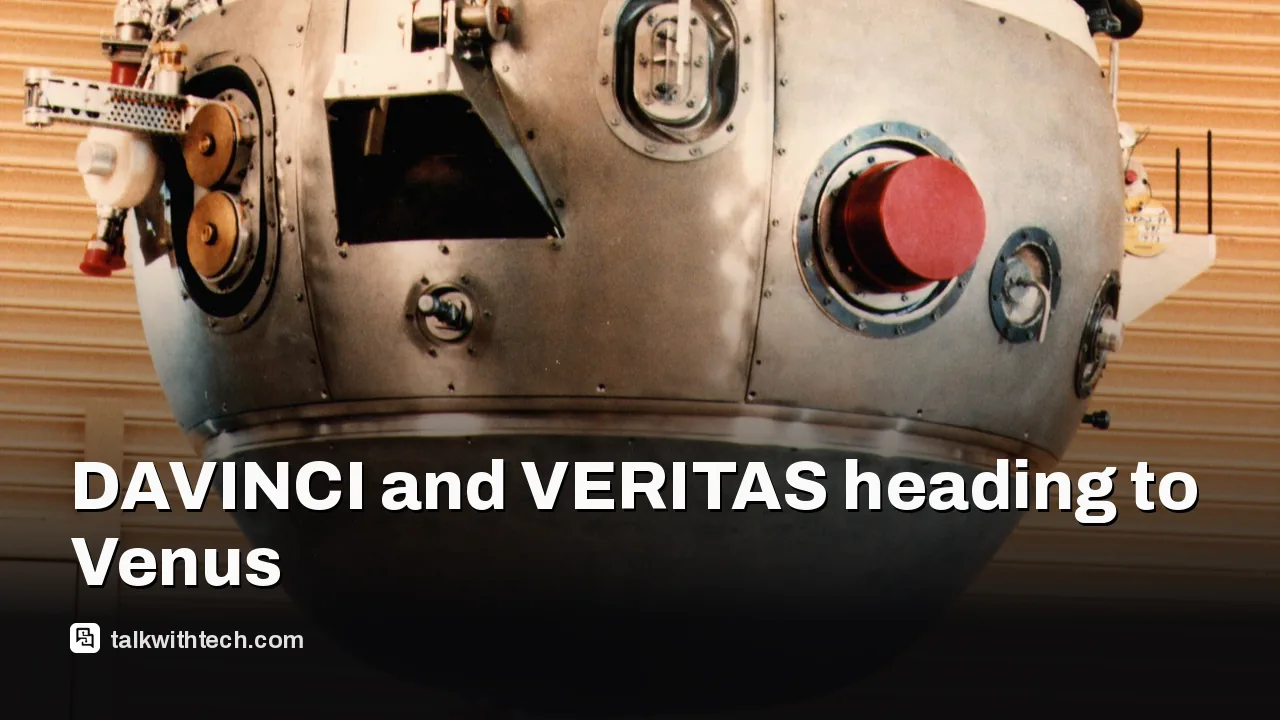
DAVINCI will descend through Venus’ atmosphere to study its gases and collect atmospheric data, aiming for a 2030s launch window.
VERITAS will map Venus from orbit using radar, targeting a 2032 launch, while Europe plans its EnVision orbiter for the same year.
A privately funded probe from Rocket Lab could join the effort in the late 2020s or early 2030s, though specifics are still being worked out.
Quick read · 2 min
NASA is re-committing to Venus exploration with two missions planned for the early 2030s and a possible private probe in the mix. One mission would descend through Venus’ atmosphere to sample gases and capture images, while another would map the planet’s surface from orbit. Europe’s EnVision is also targeting 2032.
Why it matters: Venus is a natural laboratory for understanding how rocky planets evolve and how Earth compares to its neighbor. These missions could reshape climate and planetary formation ideas if they succeed.
What happens next: NASA will finalize budgets and instrument suites, with official launch timelines expected in the coming years. A private probe concept from Rocket Lab could join the effort, depending on funding and feasibility.
DAVINCI: descent probe through Venus’ atmosphere
VERITAS: radar mapping from orbit
EnVision: European Venus orbiter targeting 2032
NASA is regrouping its Venus plans after a rocky period and now has a clearer path to a two-mission push in the early 2030s. The agency is pursuing a descent probe to study Venus’ atmosphere and a separate orbital map of the planet’s surface, with international partners lining up around the same timeframe.
The first mission, a descent probe designed to drop through Venus’ thick skies, is expected to carry instruments to sample atmospheric gases and image layers of the planet as it falls. The goal is to provide the most detailed look yet at Venus’ atmospheric chemistry and dynamics, a longstanding gap in our knowledge since the last American and Soviet missions decades ago.
Following that effort, a second mission would orbit Venus and map the surface using radar. This radar mapping would complement other data to reveal surface features and growth patterns over time, helping scientists understand Venus’ geologic history and interior structure.
Europe is also moving forward with its own Venus mission, EnVision, which is slated for 2032. The combined US-European effort would give scientists a more complete picture of Venus, from cloud layers to crustal features. The latest planning sessions highlighted renewed commitment to these projects after earlier budget and collaboration hurdles, though the exact budgets and instrument sets remain to be finalized.
In addition to the official missions, Rocket Lab has floated a privately funded probe that could join the Venus effort, potentially targeting a launch as early as 2027. Officials say this concept is not a formal plan yet, and timing could shift depending on funding and technical considerations.
What this means for people back on Earth is straightforward: Venus remains a proving ground for understanding how rocky planets evolve. If the missions succeed, scientists will gain direct data about Venus’ atmosphere and its surface, which could inform climate models and theories about how terrestrial planets form and change over time.
Next steps involve finalizing mission costs, securing partnerships, and locking in the instrument packages for each spacecraft. Expect official launch windows and detailed timelines to emerge in the coming years as agencies and partners align their plans.
For space fans, this marks a renewed push to unlock Venus as a scientific treasure trove. And for everyday readers, it’s a reminder that the solar system still holds big questions that scientists are actively chasing with public funding and private help alike.
What happens next will depend on budget cycles, international cooperation, and the pace at which instruments get finalized for each mission. The next major milestone is firm launch windows and the exact science goals for DAVINCI and VERITAS as they move closer to reality.
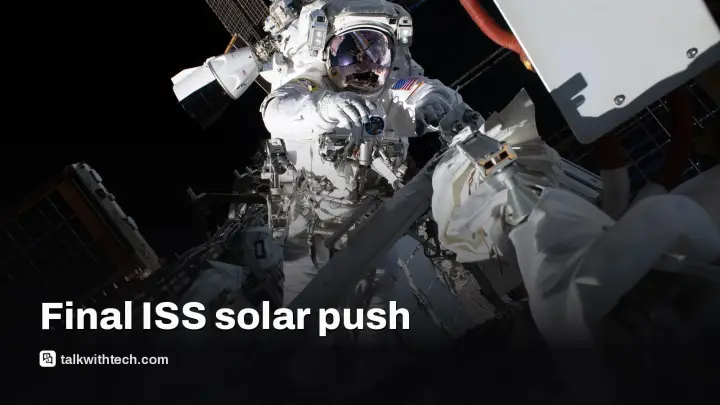
NASA will preview U.S. spacewalks 100 and 101 to install the final roll-out solar arrays on the International Space Station, boosting power by about 30%.
NASA’s SPEARS project is developing solid-state batteries that can survive the Moon’s extreme temperatures, a step toward powering Artemis missions and space tech on Earth.