Artemis III will skip a 2027 lunar landing and shift to an Earth-orbit test of Orion with commercial lunar landers in 2027.
The 2028 plan includes a full orbital rendezvous and operations test before any surface mission.
The change emphasizes safety, system integration, and data collection across multiple vendors.
The mission still aims to advance crewed spaceflight capabilities and science opportunities with commercial partners.
Quick read · 1 min
NASA is shifting Artemis III to 2028 and will begin with Earth‑orbit tests that pair Orion with commercial lunar landers from SpaceX and Blue Origin. The plan is to prove docking and operations in orbit before any surface landing.
This staged approach prioritizes safety and system integration, especially with multiple vendors involved. It also keeps opportunities for in‑flight science and technology demos alive as the work continues.
Earth‑orbit rendezvous tests with two commercial landers in 2027.
Follow‑on lunar‑orbit testing and a future surface mission in later flights.
Focus on crew readiness, mission control coordination, and data collection.
NASA is changing the roadmap for returning humans to the Moon. Artemis III, once scoped as a direct lunar landing, will now target a 2028 timeline. The agency says the next phase will center on a pair of Earth‑orbit tests that verify Orion can safely rendezvous and operate with commercial lunar landers from SpaceX and Blue Origin before attempting a surface touchdown.
After Artemis II’s successful flyby, NASA planners are prioritizing technology validation, crew readiness, and cross‑vendor coordination. The goal is to prove the flight choreography, how spacecraft and landers meet, dock, and work together, works reliably in Earth orbit first. Only after those checks are solid will a follow‑on mission aim for lunar orbit and, later, a surface mission.
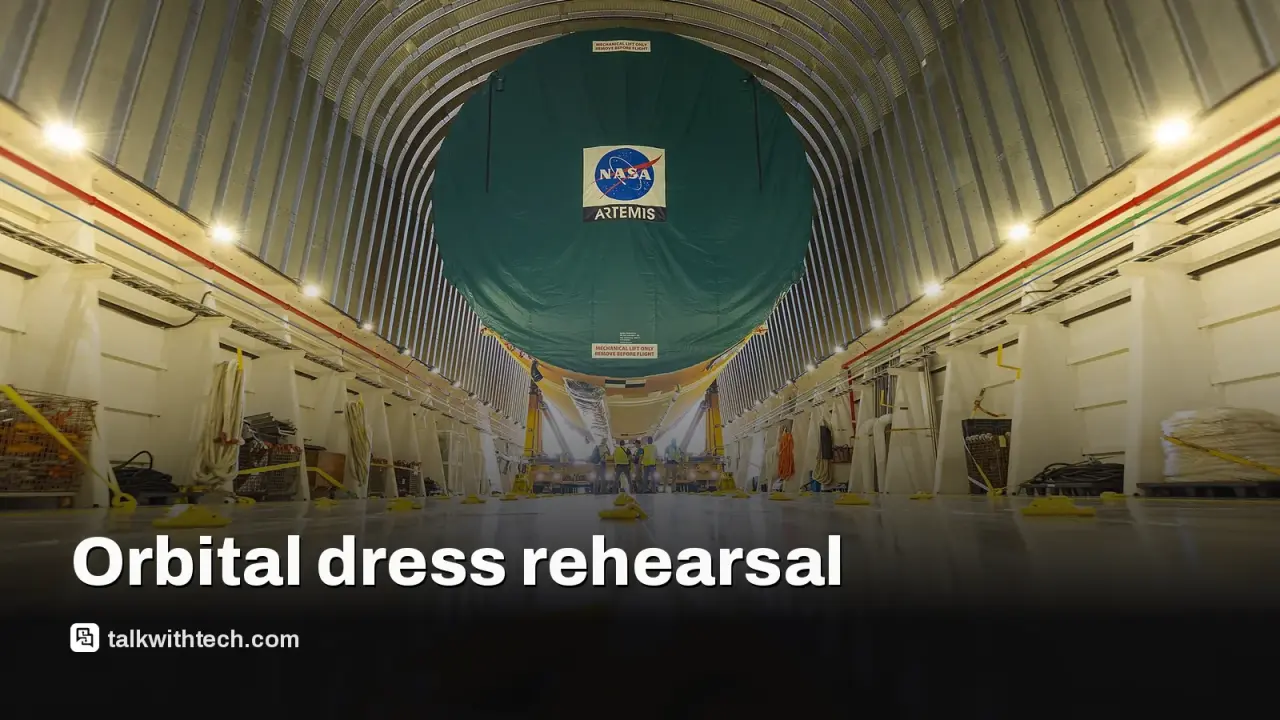
In practical terms, this approach means NASA will run a dress rehearsal with Orion in Earth orbit, alongside test articles from the commercial partners. The landers will practice docking maneuvers and operations in an environment that mimics the conditions of a lunar mission, but without committing to a surface landing just yet. This staged approach gives engineers more time to troubleshoot interfaces between Orion, the landers, and the mission control system.
The agency has framed the shift as a prudent step to reduce risk. With multiple vendors contributing critical hardware, coordinating software, communications, and life-support systems becomes a complex, multi‑year puzzle. NASA wants to ensure the crew can perform in‑flight science prompts, assess evolving conditions, and make informed decisions as they work with partner vehicles in a shared orbital environment.
From a science and exploration standpoint, Artemis III still serves a broader goal: to build experience that can support longer, more capable human missions beyond Earth’s near neighborhood. While the immediate focus is on tech validation and crew interactions, the plan also leaves room for in‑orbit experiments and demonstrations that can be performed alongside the testing regime.
Barbara Cohen, a scientist on Artemis III, has described the approach as a way to align human observation and on‑board decision making with robotic assets and commercial hardware. The change is not about delaying exploration for its own sake, but about gradually increasing confidence in a high‑risk, multi‑vendor mission profile before stepping onto the lunar surface again.
In short, Artemis III will not land in 2027 or 2028 as once hoped. The next milestones focus on Earth‑orbit rendezvous and operations with two commercial landers, followed by a lunar‑orbit test and eventual surface mission in a later flight. The emphasis is on getting the integration right, improving safety, and extracting actionable knowledge that can guide future crewed missions to the Moon and beyond.
A drought linked to El Niño has set the stage for a longer, more intense fire season in the Amazon, with satellite data showing rising fires and smoke since September 2026.
Lehigh researchers demo a concrete-based thermal battery that stores heat from data centers and other sources, offering flexible cooling and power options.
3 min read
We use cookies to understand how readers use Talk With Tech, so we can make it better. Is that OK? Privacy policy
The Daily Brief
Today's biggest tech stories, in 5 minutes
Every morning, the news that matters from AI, phones, apps and the people shaping tech. Explained in plain English. Free.
One email a day. No spam, unsubscribe anytime. Privacy policy