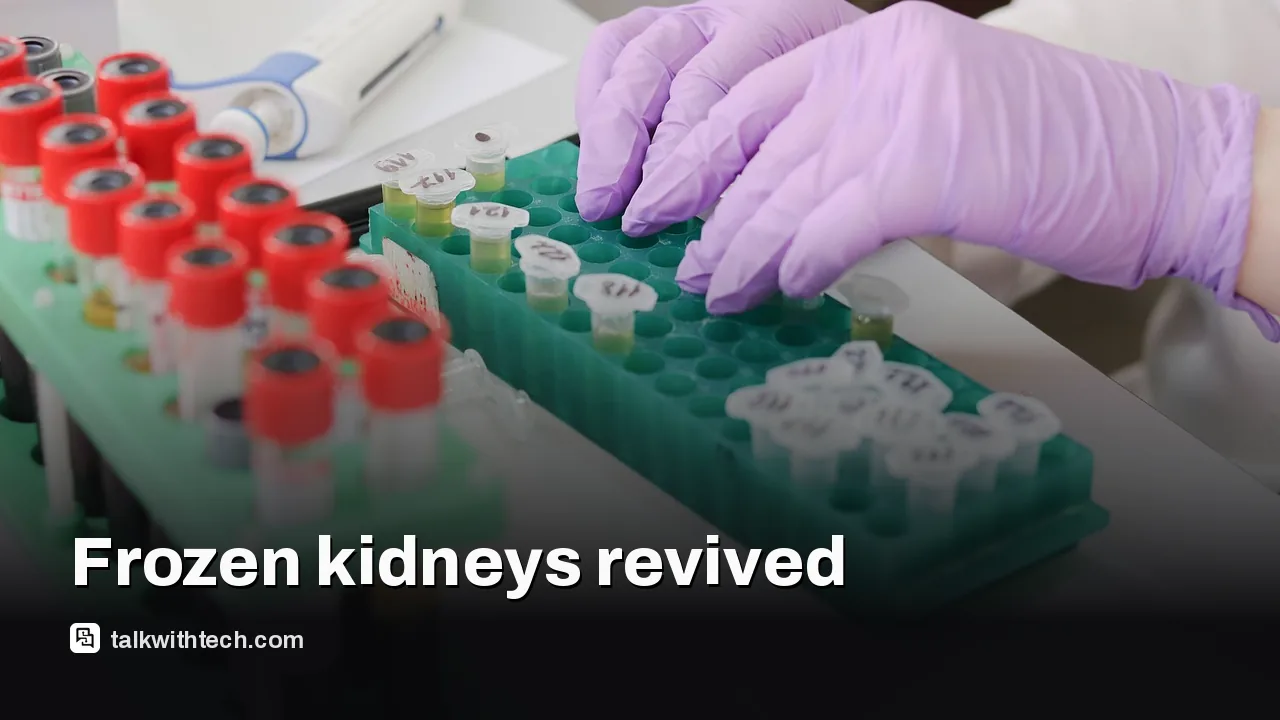
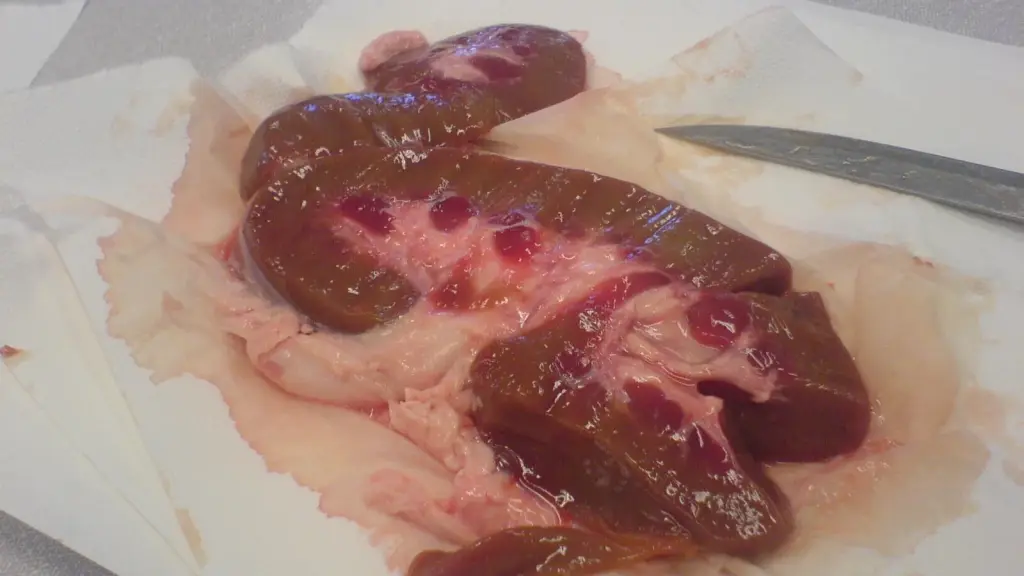
Researchers cooled pig kidneys to -150 °C and stored them for months, then rewarmed them and tested function in pigs.
The kidneys regained color and produced urine after transplantation, a sign they were working again.
The approach uses iron oxide nanoparticles to heat organs evenly during rewarming, a step forward from previous methods.
Researchers say this could lead to long-term banking of human organs, potentially easing shortages.
Quick read · 1 min
Scientists have revived pig kidneys that were frozen for more than a year and then tested in pigs. The kidneys regained color and produced urine, indicating they were working again. The method uses iron oxide nanoparticles to heat the organ from inside, allowing precise, rapid rewarming.
If this approach translates to humans, it could pave the way for long-term organ banking, easing shortages and letting surgeons plan transplants more effectively.
Next steps include peer review and larger animal studies. If those are successful, researchers would move toward human trials, a path that could take years.
In a milestone that feels almost sci-fi, researchers have revived pig kidneys that were cooled to ultra-low temperatures and stored for more than a year. After rewarming and testing in pigs, the kidneys regained color and produced urine, signaling they were functioning again. The work, described by the team as a significant advance in organ cryopreservation, hints at a future where organs can be banked for long periods and delivered to patients when needed.
The study, shared as a preprint and not yet peer-reviewed, builds on years of cryopreservation experiments. The researchers paired a cooling method called vitrification with a novel rewarming approach. They infused the organs with iron oxide nanoparticles, which heat up when exposed to a magnetic field. By flipping the field between two states, the particles generate heat inside the organ, allowing researchers to control the rewarming rate precisely. This helps prevent the damage ice crystals can cause when large tissues warm unevenly.
01
Why this matters now
Organ shortages remain a huge barrier to timely transplants in the United States and many other countries. The current preservation window is measured in hours rather than days or weeks, which constrains matching donors to recipients and increases the risk of organ rejection. If scientists can reliably bank organs for longer, doctors could better schedule transplants, reduce waste, and tailor immune preparation for recipients ahead of time.
02
The concrete steps behind the test
The kidney is harvested from a donor pig and flushed with a standard preservation solution. It is then cooled slowly, infused with cryoprotectants to guard against ice, and loaded with iron oxide nanoparticles. The organ is cooled to below -120 °C, then rewarmed using a carefully tuned magnetic field. The researchers performed this sequence on pig kidneys and then transplanted them into pigs to test function, watching for signs like color return and urine production.
03
What scientists say, what’s uncertain
Experts unaffiliated with the work call the result a major milestone for organ banking. Still, the paper’s authors caution that sustained life support and long-term function have yet to be demonstrated. The reported results are early, and peer review could refine the method or reveal new challenges in translating from pig models to humans.
04
What this could mean for you
If the technique proves scalable and safe in humans, organ banking could reshape how doctors approach transplants. Patients could wait for organs that are kept in a state of suspended animation, rather than facing dwindling donation pools. In practical terms, that could mean shorter wait lists and better timing for surgeries, with organ matching and immune preparation happening well in advance.
The researchers will likely publish more details as the work undergoes peer review, and other labs may try to replicate the results. If validated, the approach would move into larger animal studies before any human trials are considered. The timeline for that is unknown, but the field is watching closely for whether this can be scaled to human-sized organs and long-term viability.
06
Quick answers
What happened?
Pig kidneys cooled to ultra-low temperatures were rewarmed and shown to function in pigs, a first-of-its-kind demonstration.
Why does this matter to me?
Longer-lasting organ banks could ease shortages and give doctors more time to prepare recipients, potentially shortening wait times for transplants.
What’s the next step?
Peer review will test the robustness of the results, followed by larger studies to assess long-term function and safety in humans.
A drought linked to El Niño has set the stage for a longer, more intense fire season in the Amazon, with satellite data showing rising fires and smoke since September 2026.
Lehigh researchers demo a concrete-based thermal battery that stores heat from data centers and other sources, offering flexible cooling and power options.
3 min read
We use cookies to understand how readers use Talk With Tech, so we can make it better. Is that OK? Privacy policy
The Daily Brief
Today's biggest tech stories, in 5 minutes
Every morning, the news that matters from AI, phones, apps and the people shaping tech. Explained in plain English. Free.
One email a day. No spam, unsubscribe anytime. Privacy policy