Amazon fires 2026 El Niño drives earlier, longer blaze season
A drought linked to El Niño has set the stage for a longer, more intense fire season in the Amazon, with satellite data showing rising fires and smoke since September 2026.
Talk With Tech Newsroom
The short version
El Niño-driven drought has spurred an earlier and longer fire season in the Brazilian Amazon.
Satellite data since September 2026 shows sharp increases in fire activity and smoke around Manaus and Santarém.
Officials warn air quality in some cities has deteriorated, with impacts on daily life and health.
Experts expect the fire season to continue into late 2026 and into 2027, with a north-south spread in weeks ahead.
Quick read · 1 min
NASA notes a drought linked to the El Niño climate pattern is triggering a longer and more intense fire season in the Amazon. Fires have been rising around Manaus and Santarém since September 2026, with poor air quality in Manaus on at least one day in October.
The fires are part of a known El Niño-driven sequence: drought, fires, and smoke that spreads through the tropics. Scientists expect the trend to continue into late 2026 and perhaps into 2027, depending on rainfall later in the season.
Satellites like FIRMS and MODIS are used to observe fires and smoke; some fires may go undetected due to dense smoke or canopy cover.
Air quality in Manaus dropped to unhealthy levels on Oct 12, illustrating how forest fires affect daily life far from the actual flames.
MapBiomas and similar networks help fill detection gaps by combining multiple data sources.
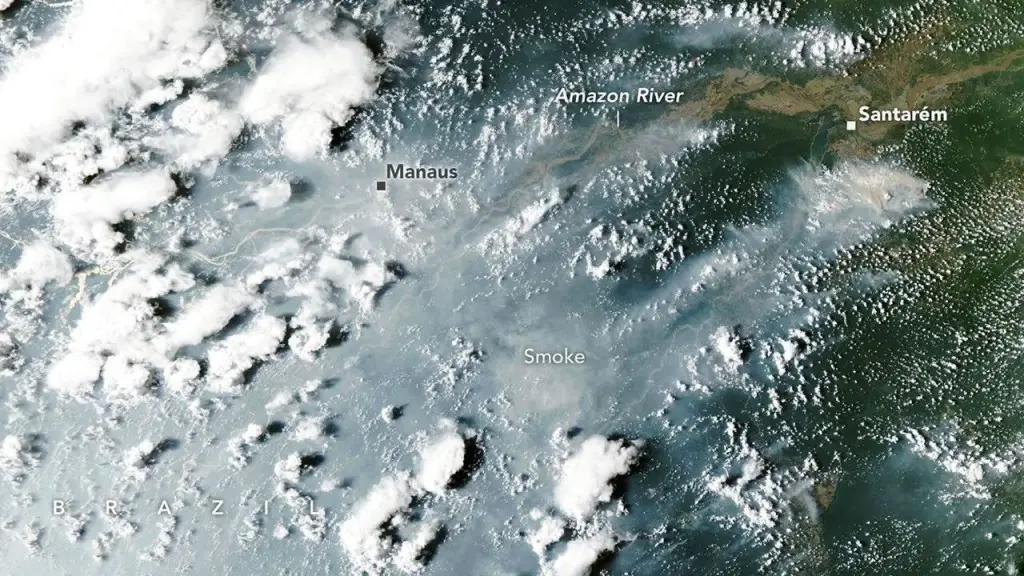
Fires are flaring up in the Brazilian Amazon this fall in a pattern tied to a stronger-than-usual El Niño. NASA researchers say a drought accompanying the climate pattern has primed forests for burning, and satellite notices began in September 2026. The fires are mainly in the central and eastern Amazon, including near Manaus and Santarém, two major transportation and population hubs.
El Niño disrupts rainfall, and this year the drought is intense enough to worsen fire risk across vast forested areas. Scientists describe the current situation as the second domino in a cascade seen during past El Niño years: drought first, then peat and forest fires, followed by more smoke covering large regions. The pattern is familiar to researchers who documented similar sequences during 2015–2016 and 2023.
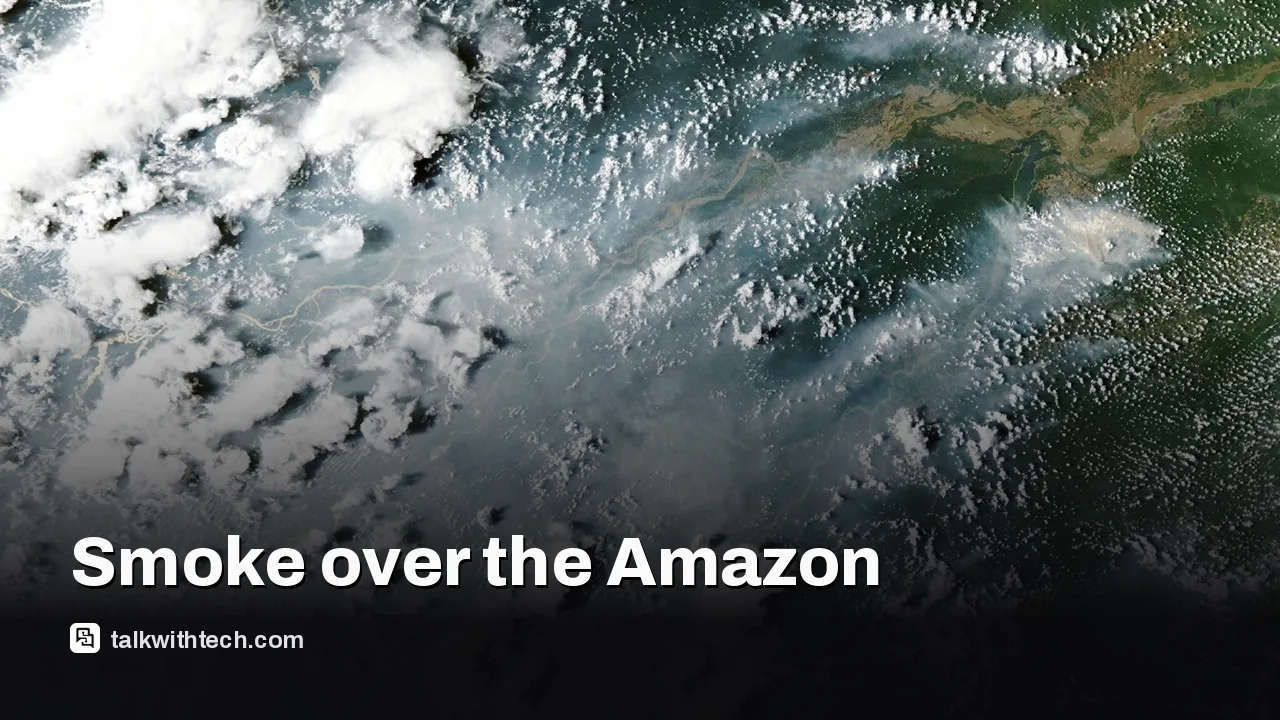
On October 12, 2026, a MODIS image from NASA’s Aqua satellite captured smoke streaming on both sides of the Amazon River, with Manaus experiencing particularly poor air quality. Local officials reported PM2.5 levels well into the unhealthy range, and city life paused as schools and events were canceled to protect residents.
That smoke isn’t just a local nuisance. Fires in these rainforests release heat-trapping gases and tiny particles that travel with wind patterns, potentially affecting air quality in other parts of the region. NASA scientists say the fires likely persist through the rainy season, which would bring relief only when rain returns later in the year or into 2027 in some areas.
Where observers look for the fires matters, too. Satellites like FIRMS,GFED, and NASA Worldview track active fires and smoke. Yet researchers say some smaller fires can elude detection when smoke is dense, weather conditions are tricky, or the forest canopy hides heat signals. In those cases, teams like MapBiomas help fill gaps by mapping fires and land-use changes with other data sources.
“Given the intensity of this El Niño, this really is the year for people to avoid burning at all costs,” one NASA scientist said, underscoring how human activity continues to influence the scale of the fires even as climate patterns drive the underlying risk.
Lehigh researchers demo a concrete-based thermal battery that stores heat from data centers and other sources, offering flexible cooling and power options.
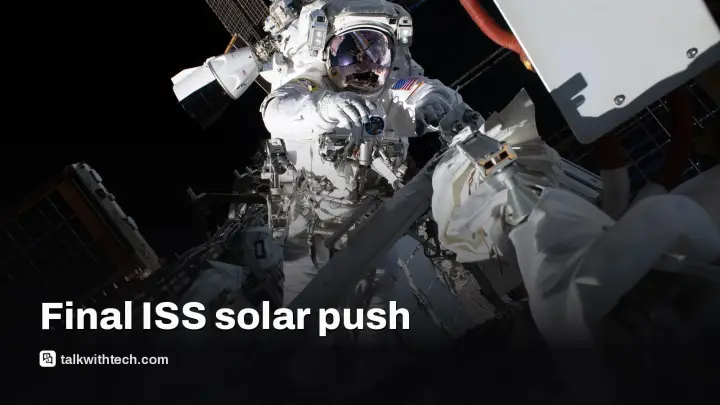
NASA will preview U.S. spacewalks 100 and 101 to install the final roll-out solar arrays on the International Space Station, boosting power by about 30%.
3 min read
We use cookies to understand how readers use Talk With Tech, so we can make it better. Is that OK? Privacy policy
The Daily Brief
Today's biggest tech stories, in 5 minutes
Every morning, the news that matters from AI, phones, apps and the people shaping tech. Explained in plain English. Free.
One email a day. No spam, unsubscribe anytime. Privacy policy