Anthropic’s AI-era office: fewer juniors, more meetings as Claude reshapes work
Anthropic reports a shift toward experienced staff and more coordination as its AI tool Claude becomes central to daily tasks.
Talk With Tech Newsroom
The short version
Anthropic notes a drop in junior technical hires since early 2025, with fewer junior staff in technical roles.
Technical teams now account for a smaller share of the workforce as the company scales and AI tools spread to non‑coding tasks.
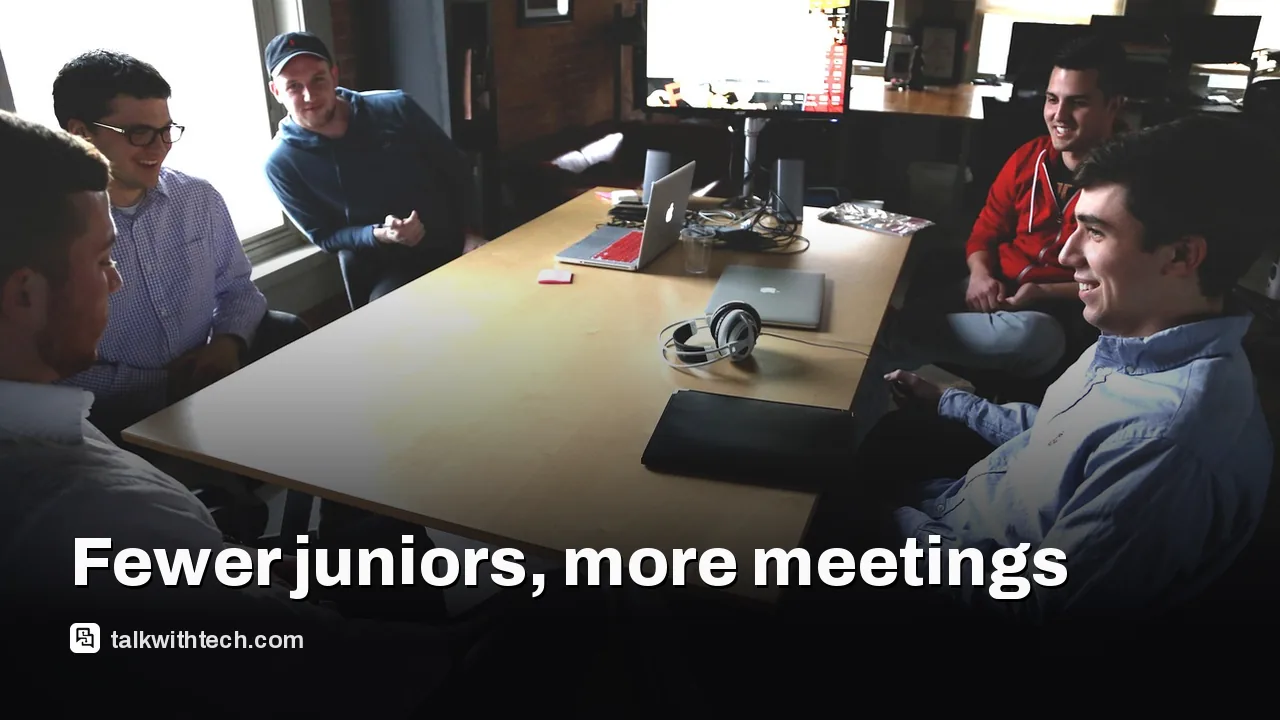
Calendar data shows meeting time rising, driven by the need for human judgment and careful coordination as Claude handles more tasks.
Quick read · 1 min
Anthropic depicts a shift toward more senior technical staff and a smaller share of junior hires since early 2025, plus broader non‑coding roles as it grows. It also notes more time spent in meetings, with human judgment becoming the bottleneck even as Claude speeds routine tasks. For workers, that means more cross‑department collaboration and a focus on higher‑level decisions as AI tools handle more tasks. What’s next? Anthropic will keep sharing how AI reshapes its team and workflows as Claude becomes more embedded at work.
Bottom line: AI changes who does what at work, often driving more coordination and smarter checks. The future of work could look more collaborative and more supervisory, with humans guiding AI outputs.
Anthropic is sharing how its internal structure has shifted over the past year, painting a picture of how AI could reorganize work across the economy. The company says it has fewer junior technical hires and a larger share of more senior staff in technical roles since early 2025. At the same time, non‑coding teams are growing as the company expands and AI tools increasingly support a wider range of tasks.
Two figures stand out. The share of junior employees in technical departments fell from 21% to 14%, and the rate of junior technical hires dropped from 27% to 9%. While Anthropic stresses this doesn’t mean lower output, it does reflect a shift in hiring strategy as Claude and similar tools become central to daily work.
Meanwhile, the portion of the workforce focused on technical work also decreased slightly, from 61% to 56%. The company attributes this to a broader expansion of business functions during growth and to AI tools enabling more people to contribute to software and product work outside traditional coding roles.
So how does this play out in day‑to‑day life at the office? Anthropic’s leadership says teams now rely more on Claude for routine tasks, while people devote more time to coordinating, validating results, and making high‑stakes decisions. A 2026 internal survey found that 27% of employees felt Claude boosted their productivity, while 20% said their roles shifted toward managing Claudes rather than doing the actual hands‑on work. One staffer compared the dynamic to babysitting, noting that every Claude request comes with its own questions and management needs.
Human review and organization remain essential because Claude floods teams with generated text and options. That bottleneck, trying to extract useful, accurate work from AI outputs, stands in for the old bottlenecks of pure manual labor. Yet Anthropic also sees tangible upside: more code produced per person, more sales closed per representative, and more contracts processed. The message is clear: AI isn’t here to replace people; it’s changing what people do and how they work together.
What this means beyond Anthropic is telling. If Claude and similar tools become deeply woven into everyday tasks, companies may shift toward roles that emphasize oversight, quality control, and cross‑functional coordination. The trend could push workers into more collaborative projects and more multi‑disciplinary teams, with meetings playing a bigger part in aligning goals and validating results.
For readers, the practical implication is simple: AI can change who does what at work, and that often means more collaboration and more time spent guiding outputs rather than drafting every line yourself. If your company is adopting comparable AI workflows, expect to see cross‑department teamwork and a stronger emphasis on the human checks that machines can’t replace.
Looking ahead, Anthropic says it will continue sharing how its staffing and workflows evolve as AI tools become a bigger part of daily operations. For workers, the trend underlines the value of staying adaptable: learning to work alongside AI teammates and using meetings to steer projects in ways machines can’t.
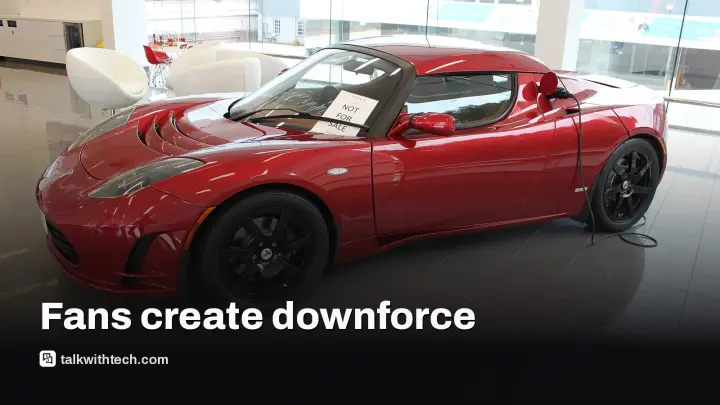
Tesla’s Roadster uses a multi-mode fan system for downforce, joining a small group of cars that use suction under the body. Here’s who else is in the mix.
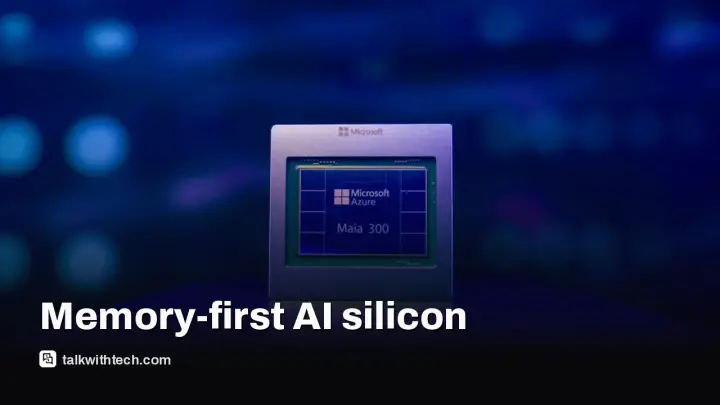
Microsoft’s Maia 300 marks a shift from raw compute to memory bandwidth, aiming for multi‑gigawatt deployments and tighter integration with in‑house AI systems.
3 min read
We use cookies to understand how readers use Talk With Tech, so we can make it better. Is that OK? Privacy policy
The Daily Brief
Today's biggest tech stories, in 5 minutes
Every morning, the news that matters from AI, phones, apps and the people shaping tech. Explained in plain English. Free.
One email a day. No spam, unsubscribe anytime. Privacy policy