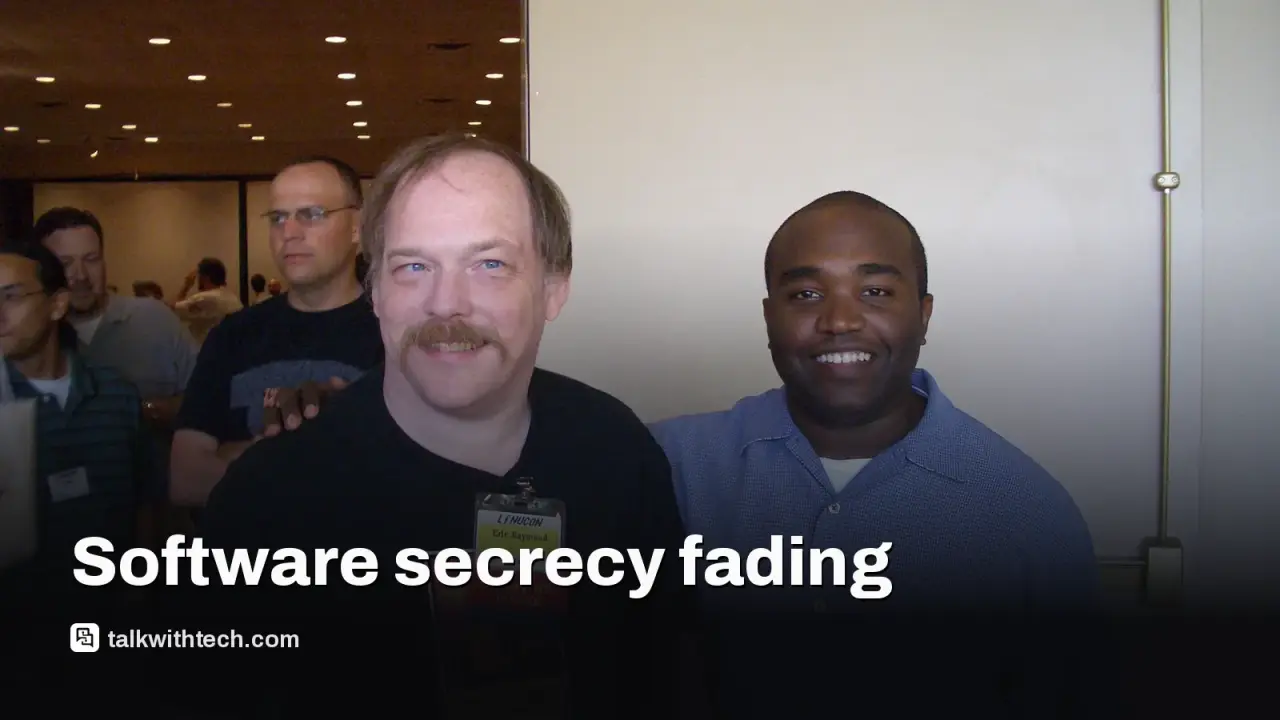
Eric S. Raymond warns cloud is software secrecy’s last shield
Software pioneer Eric S. Raymond argues that AI and decompilation tech are shrinking the secrecy moat around software, pushing developers toward open models.
Eric S. Raymond argues the secrecy moat around software is eroding as AI and decompilation tech mature.
He says the only real defense left for vendors is cloud-based SaaS shields, not actual code secrecy.
The remarks tie into broader debates about AI's impact on software development and security models.
Industry leaders have weighed in on open sourcing and the future of software protection, with mixed reactions.
Quick read · 2 min
Eric S. Raymond argues that the secrecy around software is fading as AI and reverse‑engineering tools mature. He warns this could push more developers toward open-source models or cloud‑based services where the code stays on someone else’s side. Nvidia’s Jensen Huang has offered a related take that AI will increasingly shape software itself. For everyday users, this could mean more software delivered as services rather than installed apps, changing how you buy, update, and trust the programs you use. The conversation isn’t settled yet, but expect more debate among developers, policymakers and customers as AI and security concerns collide.
What happens next may involve licensing shifts, new security norms, and a mix of open and closed approaches. If you care about how your data is treated, keep an eye on service terms and privacy policies as these debates unfold.
Open models vs proprietary code
Cloud services vs local installs
Policy and security implications
Eric S. Raymond, the long‑time software thinker known as ESR, is sounding a warning about how software is built and protected in the age of AI. In a post on X, he argues the era of “software secrecy” is fading. He says advances in AI-driven decompilation and porting could let people copy and modify complex programs more easily, even AAA games, which he describes as a game-changing shift for the industry.
What matters for everyday tech users is simple: if code isn’t kept secret the way it used to be, the way software is developed, shared and sold could change. ESR suggests the era of tight, closed-source software may be challenged not by new laws alone, but by the practical ability to reverse engineer and remix complex programs. He frames this as a move away from traditional protection toward cloud-based services that run the software on someone else’s servers (SaaS), where control is concentrated in the provider rather than by the binary sitting on your device.
The conversation mirrors a broader tech‑policy debate: should companies keep code private or embrace openness as a default? Nvidia’s CEO Jensen Huang has weighed in on a related idea, describing the idea that “AI is going to eat software” as part of the industry’s ongoing evolution. In ESR’s view, the pressure to open up grows as AI tools improve and as reverse engineering becomes more accessible, which could upend the moat that once protected proprietary software.
The end of software secrecy is almost upon us. The death of closed source, and the final triumph of open source.
I should have realized this a few months ago when I successfully decompiled the game of Firefighter from an ancient DOS shareware binary. My robot friend was able to…
Raymond isn’t predicting an immediate collapse of all protections. Instead, he argues that the only enduring defenses may be non-code barriers, like cloud-based services that run software remotely. For users, that could mean more software delivered as a service rather than installed on a computer, with access controlled by a company rather than by a user’s local device.
02
Does this mean open source wins automatically?
The piece frames a future where open source and permissive sharing become harder to resist, not a guarantee that every company will abandon private code. It’s a call to consider how open models could coexist with quality, safety, and reliability in an AI‑driven world.
03
What this means for you
For average readers, the practical takeaway is about how you get software and how your data stays safe. If more software is accessed via cloud services, your interactions hinge on provider trust and contractual protections. If you prefer having control over code, you may face more choices between self-hosted options and services that run elsewhere.
04
What happens next
The discussion is still theoretical in many circles. Expect more opinions from developers, policymakers and industry leaders as AI tools mature and as more complex software becomes easier to reverse engineer. The next moves could shape licensing models, security standards and how open‑source communities collaborate with traditional vendors.
He wrote that software secrecy is “almost upon us” to end, arguing reverse engineering and AI tools are eroding the moat around closed software.
Does this mean all software will be open?
No. It signals a trend toward more openness and cloud‑based models, but the outcome will depend on policy, business choices and how companies balance safety with accessibility.