Tesla Roadster downforce fans join rare suction car trend
Tesla’s Roadster uses a multi-mode fan system for downforce, joining a small group of cars that use suction under the body. Here’s who else is in the mix.
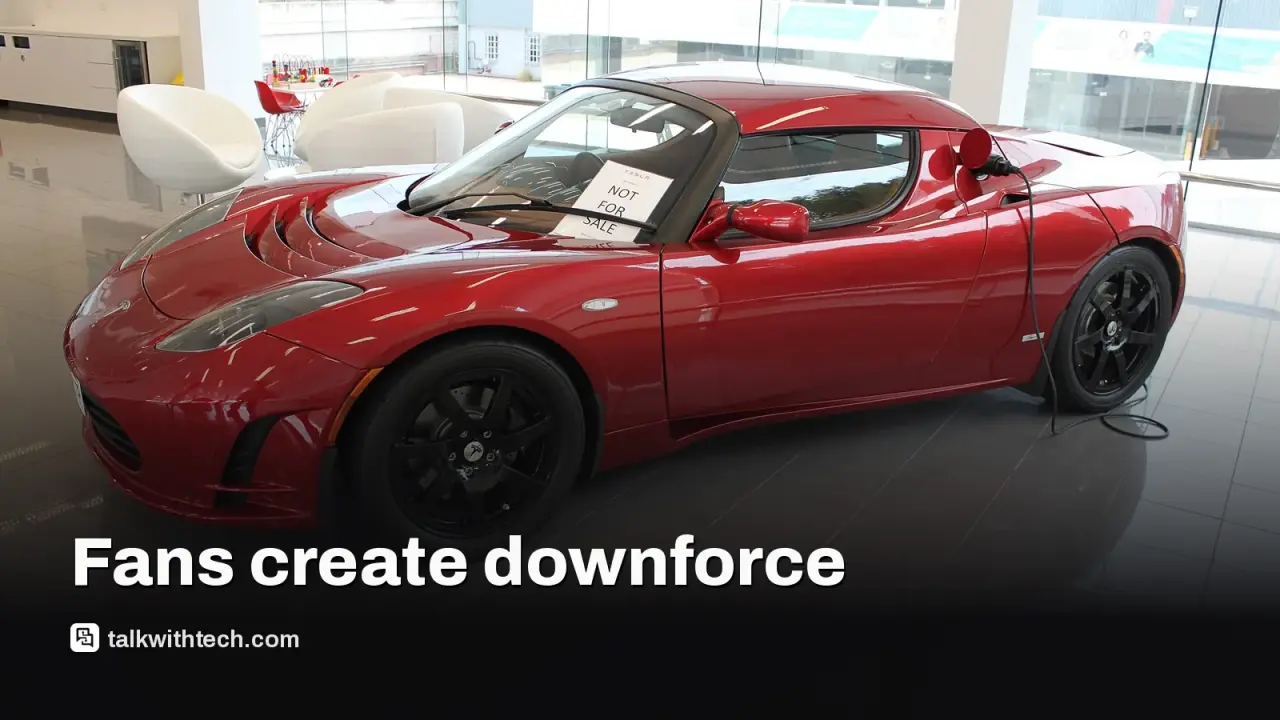
Tesla’s next-gen Roadster uses a system of powered fans and a ground-sealing design to create downforce, enabling stability even at slow speed or when stationary.
Historically, suction concepts appeared in Chaparral 2J and Brabham BT46, showing the idea isn’t new but is far more refined today.
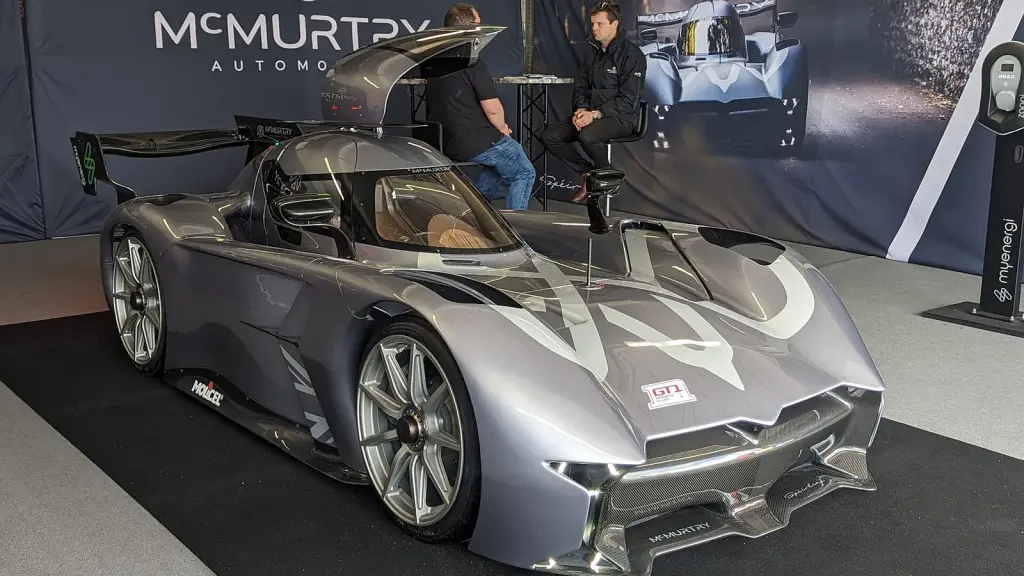
McMurtry Automotive’s Spéirling is pursuing its own suction-based approach with a production version planned for a limited run.
Production plans and reservation details are public for both Roadster and rivals, illustrating a niche market for high-grip, high-performance EVs.
Quick read · 1 min
Tesla’s new Roadster uses fans under the car to create downforce, letting it grip the road even when moving slowly or standing still. It’s part of a small historic and modern trend toward underbody suction for better stability.
Rivals aren’t far behind. McMurtry’s Spéirling is pursuing a similar approach with a limited production run and near-term deliveries. For everyday buyers, this signals that high-performance EV tech is expanding beyond traditional aero design.
What’s next? Expect more details on real-world testing, safety certifications, and how soon these ideas could influence more affordable street cars.
The Tesla Roadster is joining a small club of cars using suction under the chassis to generate downforce. Tesla showed a next-gen Roadster that can drive up a curved ramp, pause while tilted, and then land, all while air is actively drawn from underneath to press the car to the ground. Tesla says its multi-mode fan and ground-sealing system can produce downforce strong enough to keep the car glued to the road even at a standstill, which helps with cornering and acceleration.
But the idea isn’t unique to Tesla. In the 1970s, the Chaparral 2J used two fans under a skirted platform to pull air away from the road, creating suction. The Brabham BT46 also experimented with a suction system in Formula One, a controversial setup that highlighted the potential of underbody air movement to improve grip.
Today’s neighborhood of ideas includes McMurtry Automotive’s Spéirling. The company has shown a production version of its own suction-based downforce concept, aiming for a limited run of vehicles. McMurtry says the Spéirling can cling to a surface at any speed, including standstill, enabling very high cornering forces. It plans to produce a small number of units and has signaled deliveries in the near term.
In Tesla’s camp, reservations are open for a base Roadster and a higher-spec “Thrust” trim. The details about how much to put down to reserve and the exact delivery timeline have been shared publicly, though shifts in plans are common with early programs like this. The general takeaway is that suction-driven downforce is moving from a novelty to a concrete feature in some high-end electric cars.
What this means for everyday drivers is subtle but real: aero tricks and extra grip are being explored in the fast lane of EV technology. These ideas could influence future mainstream models, but for now they remain the preserve of specialist cars with premium price tags and limited availability.
What happens next: Tesla and McMurtry are rolling out near-term plans for production or near-production runs, with more details on performance figures, safety checks, and service plans likely to emerge as pilots move forward and more real-world testing occurs.
Microsoft’s Maia 300 marks a shift from raw compute to memory bandwidth, aiming for multi‑gigawatt deployments and tighter integration with in‑house AI systems.
3 min read
We use cookies to understand how readers use Talk With Tech, so we can make it better. Is that OK? Privacy policy
The Daily Brief
Today's biggest tech stories, in 5 minutes
Every morning, the news that matters from AI, phones, apps and the people shaping tech. Explained in plain English. Free.
One email a day. No spam, unsubscribe anytime. Privacy policy