An Austrian MEP says she was targeted by nude deepfakes online, a broader trend affecting many female EU lawmakers.
A new EU ban on AI undressing apps is set to take effect on 2 December, but critics want stronger enforcement beyond written rules.
Advocacy groups urge national authorities to close loopholes and prevent digital violence that chills women from public life.
Quick read · 1 min
Austrian MEP Lena Schilling says nude deepfakes of her circulated online, part of a broader pattern targeting female EU lawmakers. A think tank found that 1 in 6 female MEPs faced sexualised AI content. The EU plans a ban on AI undressing apps to take effect by 2 December, but advocates want stronger enforcement to close loopholes.
The story matters to readers in the US, UK and Canada because it highlights how digital abuse can threaten political participation and privacy. It also shows why enforcement and cross-border rules around AI tools matter for everyday life.
EU ban on nude AI-editing apps to take effect 2 December
Advocates demand tougher enforcement and closing loopholes
Protect your accounts and think carefully about what you post online
The claim hits hard and quickly: an image of a public figure, stripped of clothing, surfaced online and bore her identity. Austrian MEP Lena Schilling says she was among those targeted last month, and she’s not alone. A Berlin-based think tank, Agora Digitale Transformation, found that one in six female EU lawmakers have been targeted by sexualised AI-generated content. Schilling describes the moment she opened the link to the image as a stark reminder of how digital abuse can reach into the heart of politics.
Schilling is part of a wider push in Europe to curb this kind of harassment. She’s co-signed a letter with fellow lawmakers calling for tougher rules to accompany an EU-wide ban on apps and websites that use AI to undress people. The ban is slated to take effect across the EU on 2 December, but the signatories say laws on the books only matter if authorities actually enforce them and close loopholes that let disrupters keep operating.
The report behind Schilling’s experiences shows how deepfake pornography has become a systemic threat to women in European politics. It also underscores the real-world consequences: more women may be pushed out of public life or deterred from seeking office because of online harassment that targets their bodies, not just their ideas.
01
What the new EU rule is supposed to do
The coming rule targets AI-powered “nudifier” apps and similar tools that remove or alter clothing in photos. The aim is to make it harder for someone to exploit another person’s image for humiliation or control. The signatories argue that even with a ban, enforcement matters just as much as the law itself. They emphasize that laws without strong action behind them won’t stop these abuses and call for quicker takedowns and penalties for violators.
02
Why this matters to everyday readers
For people in the US, UK and Canada who use social apps, the story matters because it highlights a broader risk: even public figures are not immune to digital abuse that can spread quickly and be weaponized against them. It also shows why policy discussions around AI safety, platform moderation and cross-border enforcement are not just abstract debates. They affect privacy, safety and the basic ability to participate in public life without being humiliated online.
03
What happens next in policy and on the ground
EU lawmakers are pressing for a strong approach that pairs bans with practical enforcement. That means clearer notices to app stores, faster takedown processes, and real penalties for violators. It also means national authorities stepping up investigations when deepfake content targets politicians or other public figures. The deadline of 2 December looms, but critics say the real test will be how actively member states police non-compliant platforms afterward.
04
What this means for you
If you worry about online privacy and digital safety, this is a reminder to protect your own accounts. Use strong, unique passwords, enable two-factor authentication, and be cautious about images you upload. If you’re a public figure or someone in the public eye, consider watermarks or other safeguards for content you share. And if you rely on apps for editing or sharing images, stay aware of what features could be misused and how platforms police those tools.
The EU is aiming to roll out enforcement by 2 December. In the meantime, expect more outreach from lawmakers and advocacy groups urging stronger policing of AI-enabled misuse. Readers should watch for updates on how member states implement enforcement and what that means for app makers and platform operators.
06
Quick answers
What is happening now with nudity deepfakes in the EU?
The EU plans a ban on AI-based undressing apps to curb digital violence against women in politics, with enforcement expected by 2 December.
Why is this important beyond Europe?
Readers in the US, UK and Canada should care because digital abuse can threaten public participation and privacy, and it shines a light on how AI tools are regulated across borders.
Apple chief executive John Ternus calls the memory chip shortage a crisis and says all options are on the table as the company tests Chinese memory, with potential spillover for upcoming devices.
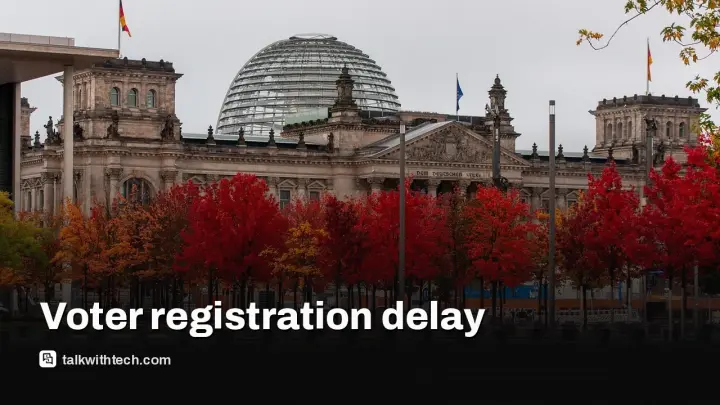
Texas says it has fixed a programming error in the driver’s license portal that delayed hundreds of thousands of voter registrations, prompting lawsuits from voting groups.
4 min read
We use cookies to understand how readers use Talk With Tech, so we can make it better. Is that OK? Privacy policy
The Daily Brief
Today's biggest tech stories, in 5 minutes
Every morning, the news that matters from AI, phones, apps and the people shaping tech. Explained in plain English. Free.
One email a day. No spam, unsubscribe anytime. Privacy policy