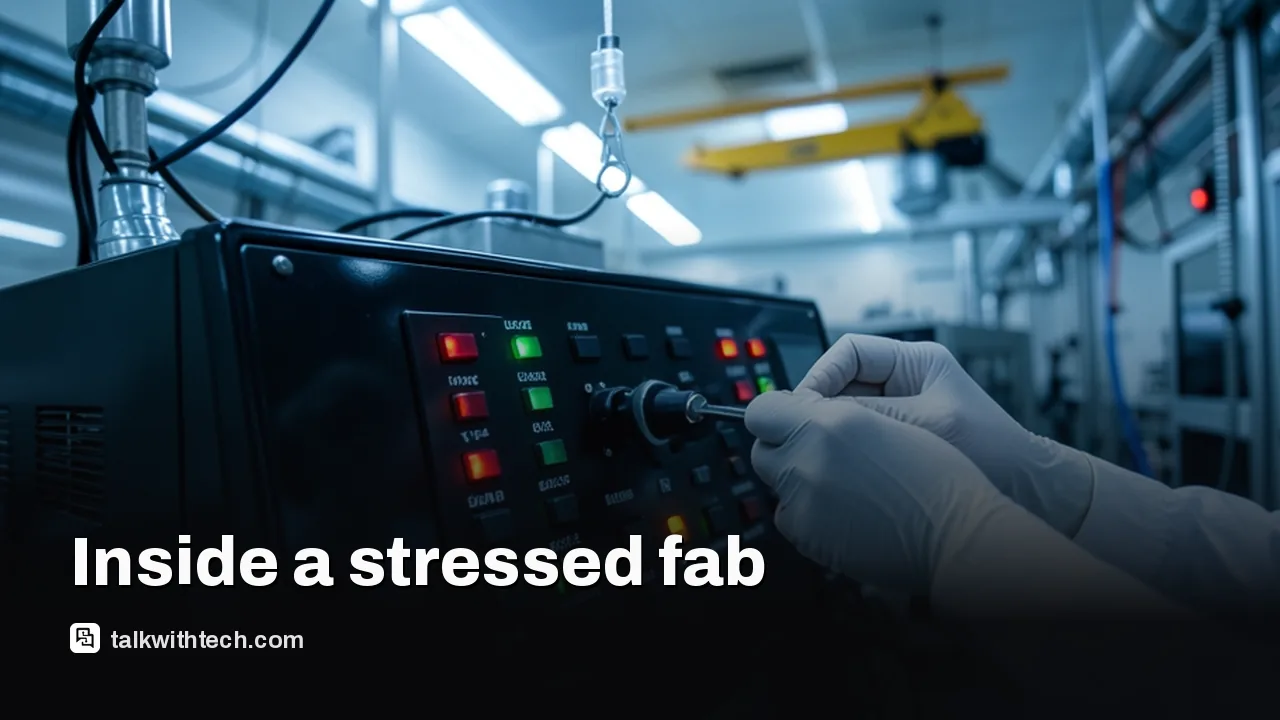
Fab24hr game puts you inside a stressed Taiwan chip fab
A free, in-browser sim from Taiwan drops players into a wafer fab with two modes, and workers say it captures the daily stress of chip production.
Talk With Tech Newsroom
The short version
Fab24hr is a 3D web game that simulates life inside a semiconductor wafer factory.
It offers two modes: a narrative 12-chapter journey and a day-by-day factory simulation for different roles.
Taiwan TVBS reports the game is popular and that some workers compare it to a horror experience due to its realism.
The game runs in a browser in multiple languages, with no heavy downloads required.
Quick read · 2 min
Fab24hr is a browser-based game from Taiwan that puts you in the shoes of semiconductor fab engineers. It has two modes: a 12-chapter story about taking a chip from idea to customer, and a day-by-day factory simulator for different roles. Players say it feels surprisingly authentic and sometimes stressful because it mirrors real production pressures. The game is available in multiple languages and runs in a web browser, with no heavy downloads needed. If you’ve wondered why a small tool hiccup can delay a phone release, this is a good, low-friction way to understand it. Look for updates as the game expands.
What this means for you: a clearer sense of how delicate and interconnected chip manufacturing is, and why supply delays can happen even for everyday devices. The next steps? Watch for new modes or language options as developers expand the game, and share your experience with friends who assume chip pools are instant and simple.
How the two modes differ: story arc versus day-in-the-fab play.
Why workers describe the game as intense or stressful.
What it reveals about real-world chip supply chains.
A browser-based game has sparked conversations about what actually happens on a chip factory floor. Fab24hr, created in Taiwan, lets players take on the roles of engineers and operators inside a blocky, isometric wafer fab. The game isn’t designed to be a blockbuster; it’s designed to feel true to life, and that sense has struck a chord with people curious about how chips are made.
News reports in Taiwan describe the game as accessible in Chinese, English, and Japanese. Players begin by entering a character name and clocking in, then choosing one of two paths. In The life of a chip, you follow a 12-chapter arc tracing a hearing-aid chip from early development to its final customer. Expect to juggle equipment glitches, process anomalies, and sudden production hiccups as you progress. The endings aren’t fixed; your choices along the way steer the finale, which gives the game a replayable flavor even for casual players.
The other option, A day in the fab, drops you right into a specific factory location and role. An early moment has the ETCH-03 tool breaking and the team waiting for your plan to fix it. The game does more than entertain; it introduces technical terms in a way that doesn’t require prior industry knowledge, so beginners can learn while they play.
What’s striking, according to commenters and workers who’ve tried the game, isn’t just the visuals. The pacing and decision-making mirror the real-life tempo inside production environments, where a single delay or misstep can ripple through timelines and budgets. Some workers have described the experience as stressful or even “horror-like,” a reflection of the high stakes in keeping a fab running smoothly and meeting shipment deadlines.
Fab24hr isn’t trying to replace textbooks or training programs. It’s a bridge for outsiders to grasp why tiny misalignments on an R&D line can snowball into supply chain delays for phones and other devices. By letting players feel the pressure of scheduling, reporting, and tool maintenance, the game shines a light on the hidden complexity of making the chips that power everyday tech.
From its browser-only setup to its multilingual reach, Fab24hr is proving there’s an appetite for approachable peeks behind a sector that often stays behind glass walls. If the game continues to grow, it may spawn new modes or developer notes that explain why certain tools fail and how teams triage those issues in real factories.