NASA spacewalk preview shows 30% more ISS power soon
NASA will preview U.S. spacewalks 100 and 101 to install the final roll-out solar arrays on the International Space Station, boosting power by about 30%.
Talk With Tech Newsroom
The short version
NASA will hold a news conference at 2 p.m. EDT on Oct. 20 to preview U.S. spacewalks 100 and 101 for the ISS.
Spacewalk 100 on Oct. 29 will install the seventh IROSA solar array; Spacewalk 101 on Nov. 5 will install the eighth and final IROSA.
Together, the eight roll-out arrays are expected to lift available ISS power from 160 kilowatts to about 215 kilowatts, roughly a 30% increase.
Quick read · 1 min
NASA is scheduling two spacewalks to finish a major power upgrade on the International Space Station. A briefing at 2 p.m. EDT on Oct. 20 from Johnson Space Center in Houston will preview Spacewalks 100 and 101, which will install the seventh and eighth IROSA solar arrays.
Spacewalk 100 is planned for Oct. 29 and Spacewalk 101 for Nov. 5. When both are in place, the station’s power output could rise by about 30% from 160 kW to roughly 215 kW, supporting more research and longer missions.
What happens next: NASA will share schedules and media instructions as the dates approach.
NASA is giving the public a clear view of two planned spacewalks that will finish a major power upgrade on the International Space Station. The agency will host a news conference at 2 p.m. EDT on Tuesday, Oct. 20, from NASA’s Johnson Space Center in Houston. It’s a chance to hear firsthand what astronauts and engineers expect as they move to install the final pieces of the station’s updated power system.
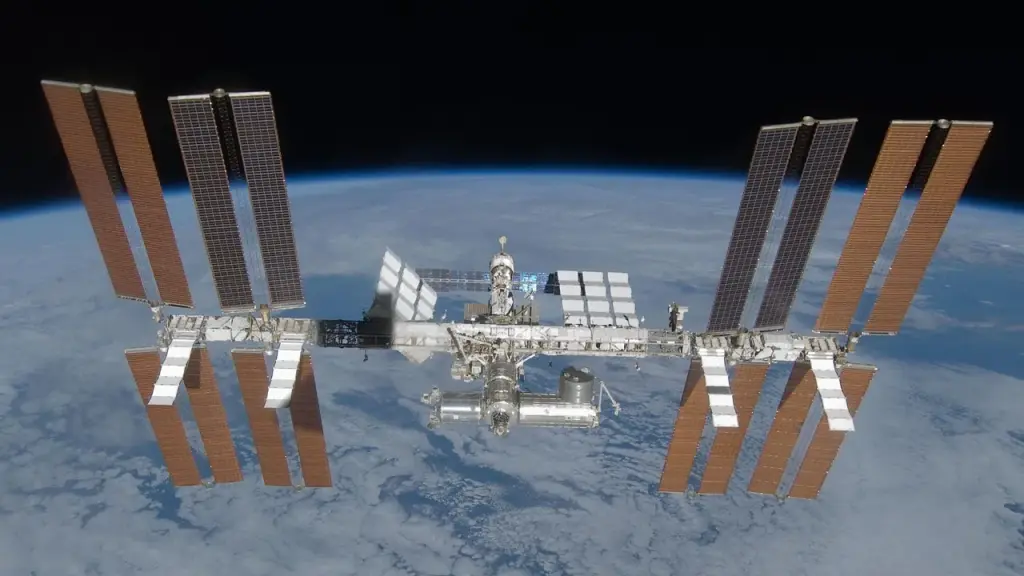
These spacewalks are part of a broader effort to deploy Roll-Out Solar Arrays, or IROSA, on the station. The work is designed to expand the station’s ability to generate electricity, supporting science experiments, life-support systems, and regular crew activities that rely on steady power in low Earth orbit.
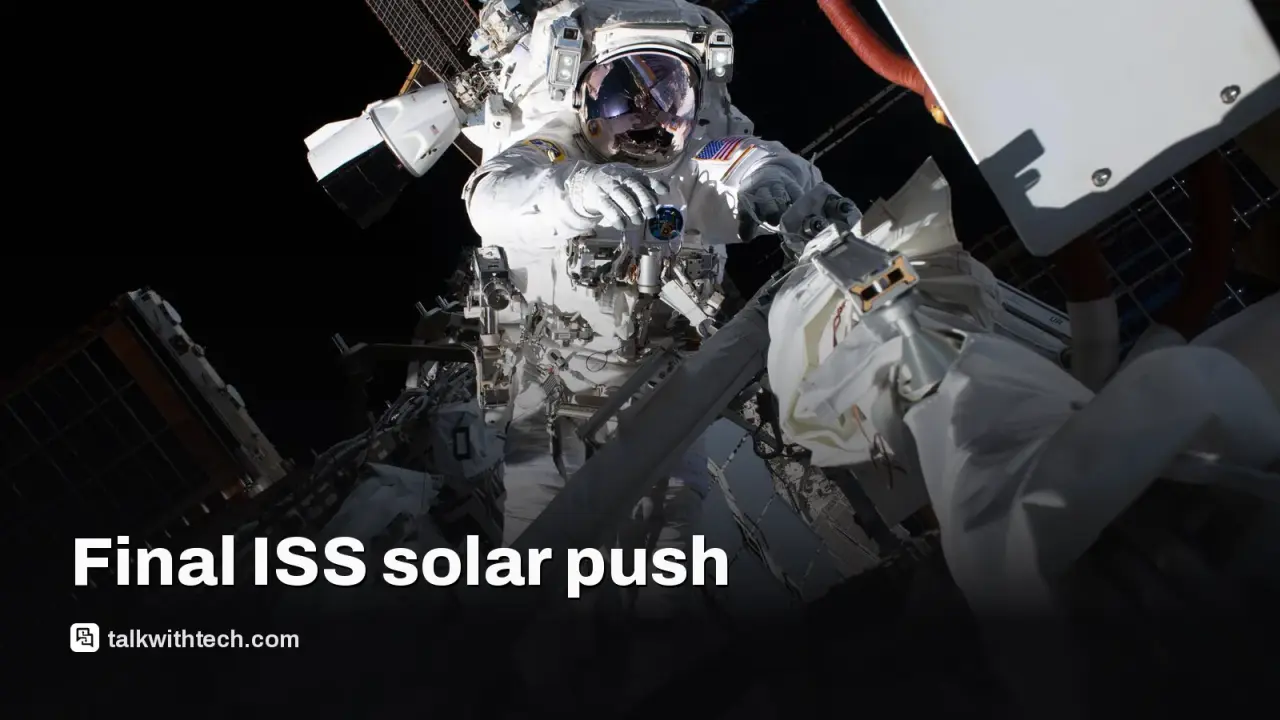
During Spacewalk 100, set for Oct. 29, astronauts Anil Menon and a Canadian Space Agency partner will leave the Quest airlock to install the seventh IROSA on the 2A electrical power channel. They will deploy the solar array and connect it to the station’s power system, a process that can take several hours as crews ensure proper electrical integration and thermal management.
Spacewalk 101, planned for Nov. 5, will complete the program by installing the eighth and final IROSA on the 3B channel. This step marks the last major hardware upgrade in the current IROSA rollout plan for the station, with both tasks aimed at lifting a portion of the station’s total power generation capacity.
In practical terms, NASA says the eight IROSA units together could push the ISS’s power output from about 160 kilowatts to around 215 kilowatts. That’s roughly a 30% improvement, enough to support more research, higher data rate experiments and longer stays for crews as the station continues assembling and maintaining critical systems.
For those following the plan, NASA notes that additional coverage details will be shared closer to the events on its live events web page and the space station blog. The agency emphasizes that these spacewalks are part of ongoing assembly, maintenance and upgrades designed to keep the orbiting laboratory functioning smoothly for international partners.
Media interested in in-person attendance should contact the Johnson newsroom by 3 p.m. on Mon., Oct. 19. Phone participation details can be requested the same day, and questions should be asked no later than 15 minutes before the briefing begins.
NASA’s SPEARS project is developing solid-state batteries that can survive the Moon’s extreme temperatures, a step toward powering Artemis missions and space tech on Earth.