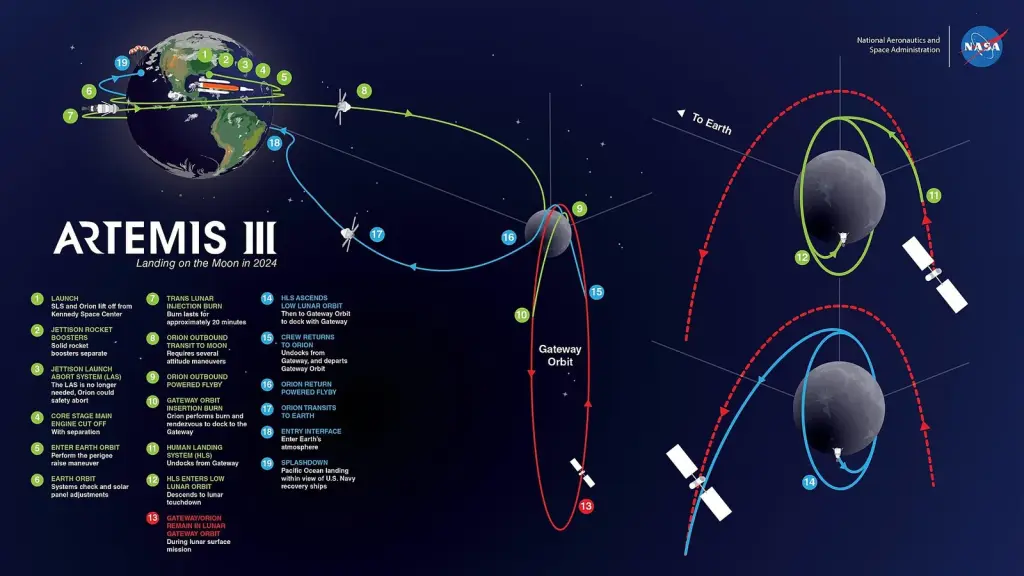
NASA will host a Kennedy Space Center briefing on Oct. 23 to share how Artemis timelines are being shortened toward a 2028 Moon landing.
The briefing will cover Artemis III tests in low Earth orbit planned for next year and progress toward returning astronauts to the lunar surface.
Officials will discuss timelines, risk reduction steps, and how the plan fits into the broader goal of a sustained lunar presence.
Quick read · 1 min
NASA plans to discuss its Artemis acceleration and the status of Moon missions at a Kennedy Space Center briefing on Oct. 23. The agency aims to return American astronauts to the Moon by 2028 and will outline tests planned for next year that validate key systems ahead of a crewed lunar landing. If you follow space policy or aerospace jobs, this briefing could influence budgets and partnerships in the coming months. Expect updates on mission timelines and hardware readiness after the event.
What happens next is simple: watch for NASA’s official statements and any shifts in the schedule or funding that come from the briefing or related budget talks.
NASA will discuss its plan to speed up the Artemis program and outline the status of upcoming Moon missions at a briefing scheduled for Friday, Oct. 23, at the Kennedy Space Center in Florida. The agency says the session will detail how it plans to return American astronauts to the Moon by 2028 and what needs to happen between now and then to make that milestone possible.
During the briefing, NASA will cover Artemis III, the mission that aims to send four astronauts to low Earth orbit to test critical systems ahead of future lunar landings. Officials will explain what systems are being validated, what risks are being mitigated, and how the timeline fits with the broader goal of establishing a sustained presence on the Moon.
NASA Administrator Jared Isaacman, NASA Associate Administrator Amit Kshatriya, and Artemis program manager Jeremy Parsons are listed as participants. The agency notes that U.S. media can attend in person if they apply by Oct. 16 and can request remote dial-in information if they cannot be there in Florida. The briefing information emphasizes ongoing collaboration with industry and international partners as part of building a long-term lunar presence.
Why this matters to readers: Artemis is the current flagship for U.S. crewed space exploration. A faster pace could influence how NASA budgets, contracts, and investments in related technologies, like propulsion, space habitats, and life-support, are allocated. It also highlights the realities of planning multi-year exploration campaigns, where milestones, funding, and safety reviews all shape the schedule.
01
What exactly is being accelerated?
The briefing will detail how Artemis aims to speed up its timetable toward a crewed Moon mission by 2028. Officials will describe the stepping stones, including test flights and hardware readiness, that feed into the first crewed lunar landing. While the exact flight manifest and hardware milestones can shift with new findings, the focus is on keeping Americans on track for a sustained presence on the Moon, not just a single landing.
Artemis III is the marquee goal for returning astronauts to the Moon, but the agency will outline how next year’s low-Earth-orbit tests will validate life-support, EVA procedures, and docking capabilities with future lunar transfer systems. These tests are meant to reduce the kinds of risks that could delay the Moon landing and to demonstrate that key technologies work together in real missions.
03
What this could mean for everyday readers
Artemis acceleration signals how the U.S. space program organizes tech work, from rocket engines to habitat modules and software for spacecraft systems. For people following tech policy and government funding, it’s a reminder that big science programs rely on a balance of safety, cost, and innovation. The progress also affects jobs and contracts in aerospace, defense, and research sectors across the country.
04
What happens next
The NASA briefing on Oct. 23 will set out the latest timing and milestones for Artemis. If you’re following this as a consumer or investor, keep an eye on official statements from NASA about any shifts in the schedule, budget requests, or new partnerships with industry. Major changes usually surface in subsequent agency updates and congressional budget proceedings.
It’s NASA’s plan to speed up the timetable for returning astronauts to the Moon and building a sustained lunar program, culminating in a 2028 Moon landing.
When is the next public update?
The agency says the update will take place on Friday, Oct. 23, at Kennedy Space Center in Florida. Media must apply by Oct. 16 to attend in person.
06
What to watch for next
Look for NASA to publish new milestones or revised timelines after the briefing, plus any new partnerships that could affect funding or development of lunar hardware.
As AI helps with CVs, cover letters, and online assessments, employers and candidates are debating what crosses the line from assistance to misconduct.
3 min read
We use cookies to understand how readers use Talk With Tech, so we can make it better. Is that OK? Privacy policy
The Daily Brief
Today's biggest tech stories, in 5 minutes
Every morning, the news that matters from AI, phones, apps and the people shaping tech. Explained in plain English. Free.
One email a day. No spam, unsubscribe anytime. Privacy policy