NASA Moon batteries SPEARS promise -200°C to 100°C endurance
NASA’s SPEARS project is developing solid-state batteries that can survive the Moon’s extreme temperatures, a step toward powering Artemis missions and space tech on Earth.
Talk With Tech Newsroom
The short version
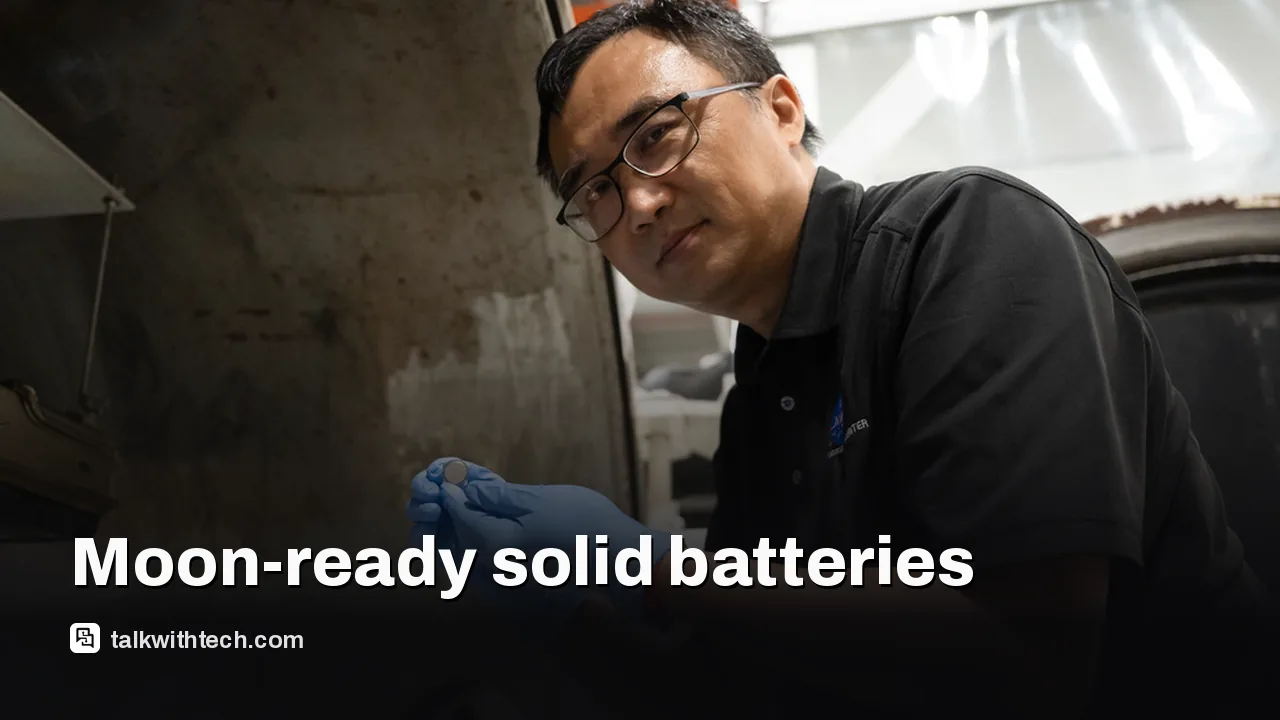
NASA is developing batteries that can survive the Moon’s extreme temperatures using solid materials instead of a liquid electrolyte.
The SPEARS project aims to power future Artemis missions by withstanding temperatures from 100 C to -200 C.
If successful, the technology could influence energy storage and thermal management on Earth.
Researchers are exploring how to warm and operate solid-state cells without high energy costs while maintaining reliability.
Quick read · 1 min
NASA is working on batteries that can survive the Moon’s extreme temperatures. The project, called SPEARS, uses solid materials instead of liquid electrolytes to resist the brutal day-night swings on the Moon.
The main goal is to power Artemis-era spacecraft and science gear without heavy cooling or warming systems. If successful, the tech could also influence how we store energy on Earth, making batteries tougher in extreme heat or cold.
In the near term, researchers will continue testing different solid materials and cell designs under simulated lunar conditions, moving from lab benches toward real hardware in future phases.
When you think about a laptop or a phone, your battery struggles in hot cars or freezing cold air. Now imagine doing science on the Moon, where the surface swings from scorching daytime heat to bone-chilling nighttime cold. NASA’s SPEARS project is tackling exactly that problem: can we build batteries that work reliably in extreme lunar temperatures?
The idea is to move away from traditional lithium-ion chemistry, which relies on a liquid electrolyte that can freeze or overheat. SPEARS stands for Solid Power for Extreme Environment Adaptability and Resilience in Space. The project tests solid ceramic or polymer materials that replace the liquid with something sturdier. Early work shows these solid-state cells can handle the cold better and require less energy to keep at operating temperatures, a crucial efficiency when every watt counts aboard a spacecraft.
NASA highlighted that the Moon’s environment is unforgiving: daytime highs can reach about 212 degrees Fahrenheit (100 degrees Celsius), while nighttime lows plummet to around minus 328 degrees Fahrenheit (minus 200 Celsius). Conventional batteries falter under such swings, which makes SPEARS a potential pathway for power-intensive systems on lunar missions, including communications, life support, and data collection equipment.
The broader goal isn’t just a one-off space battery. If the solid-state approach proves durable, engineers expect the technology could inform energy storage on Earth too, think batteries that tolerate wide temperature ranges without costly thermal controls. That would help devices and electric vehicles in extreme climates work longer between charges, though the current focus remains space-first.
NASA describes the SPEARS effort as a layered process: material discovery, cell design, and full-pack testing under simulated lunar conditions. The work involves a mix of government labs, private partners, and academic researchers, all aiming to validate a chemistry that won’t become a heat sink or a liability in the Moon’s harsh day-night cycle.
What this means for you is not a gadget you’ll buy next year, but a better chance that future space missions stay powered without bulky, energy-hungry thermal systems. The science could ripple back to Earth, where cold climates and heat waves stress battery performance in everything from robotics to grid storage prototype projects.
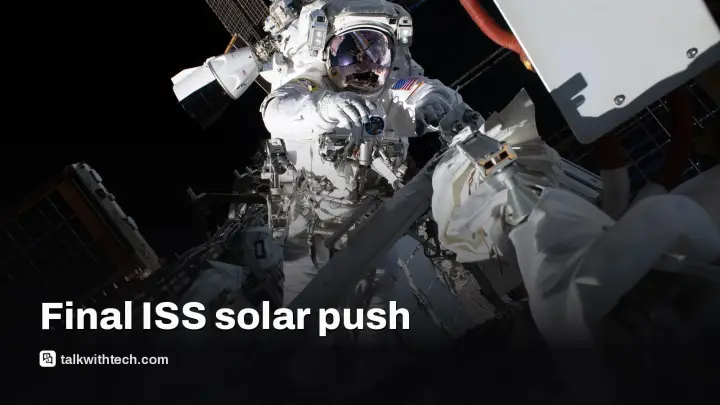
NASA will preview U.S. spacewalks 100 and 101 to install the final roll-out solar arrays on the International Space Station, boosting power by about 30%.