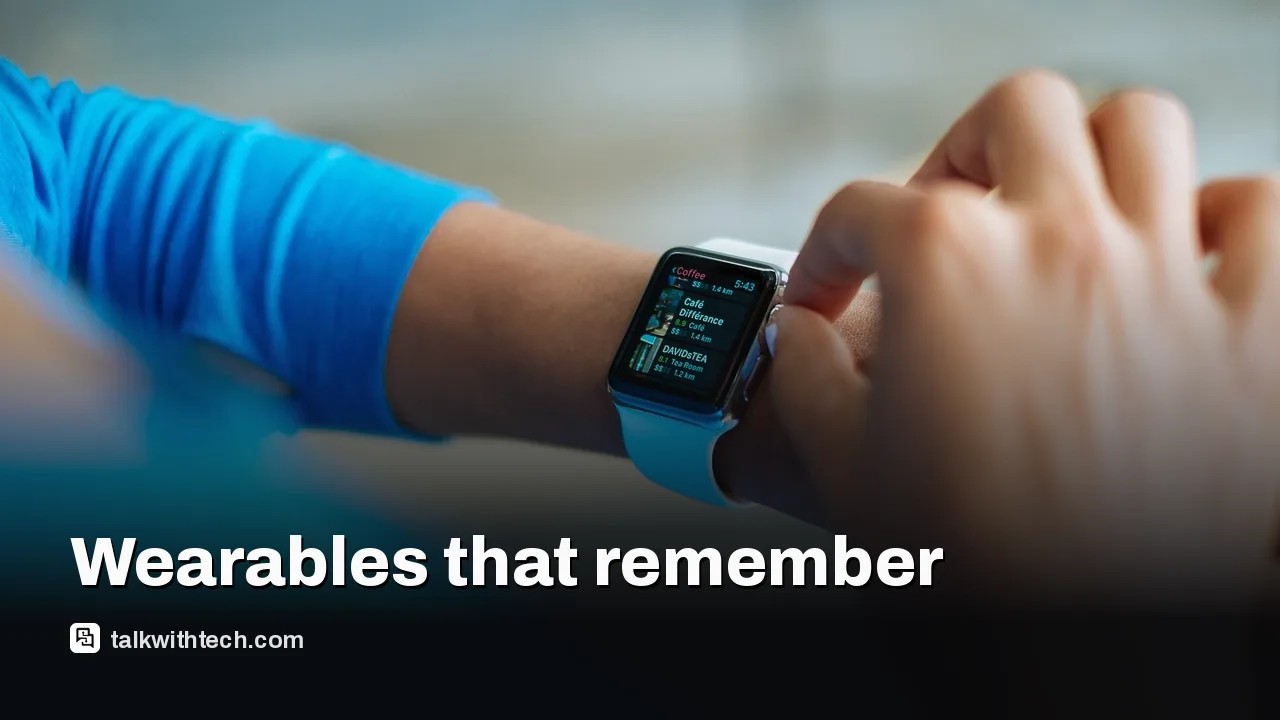
Amazon memory-enabled wearables could remember your conversations
A push toward wearables that remember more of your chats and inputs is floating around, but official details, timelines, and costs haven’t been disclosed.
Amazon is reportedly exploring wearables with memory recall capabilities, but no official product or rollout is confirmed.
Privacy protections, device support, and pricing remain unclear.
If real, memory features could make everyday interactions with wearables more convenient but raise data-security questions.
Watch for official details on availability, control options, and costs.
Quick read · 1 min
Amazon is reportedly exploring wearables with memory recall, but official details are thin. If true, it could mean faster, more contextual help from a smartwatch or fitness band, with privacy and cost questions to answer. Expect specifics on device support, regional availability, and controls in upcoming announcements.
For readers, the key questions are privacy protections, how data is stored, and whether you’ll be able to turn memory on or off easily. We’ll report back when Amazon shares concrete details on what’s stored, who can access it, and how to delete it.
Amazon is quietly exploring wearables that could remember more of your conversations, searches, and preferences. The company hasn’t publicly announced a formal product tied to memory recall, and official details about timelines, device support, or pricing are not yet available. Right now, it reads as a concept under consideration rather than a confirmed feature anyone can buy today.
For readers, the big questions are privacy, how such memory would work, and whether there might be a price tag. If Amazon moves forward, expect a mix of on-device processing and cloud-backed memory, with clear choices about what gets saved and for how long. Until Amazon confirms specifics, you should treat this as an intriguing possibility rather than a planned feature you can enable now.
01
Which devices might lead the charge?
There’s no official list or schedule. If this idea becomes real, the likely path would start with the more capable wearables that already have strong on-device AI, then expand to other devices over time. We’ll learn more only when Amazon shares concrete device eligibility and regional rollout plans.
02
Why privacy questions matter here
Memory recall on wearables means data about your chats, habits, and preferences could be stored or indexed. That data, if mishandled or breached, could expose sensitive details about your daily life. Any official plan should spell out what stays on the device, what is uploaded, and what controls exist to delete or pause memory features.
03
What it could cost or complicate your setup
Pricing isn’t public yet, so it’s unclear whether memory recall would be a free upgrade, a paid add-on, or part of a higher-tier service. If a memory feature lands, you’ll want straightforward controls to turn it on or off and to manage what gets remembered.
04
What this could mean for everyday life
Think of a wearable that can surface past interactions, reminders, or context when you ask for help. It could make finding information faster and predictions more accurate. The flip side is more data to manage, more security considerations, and more settings to understand. For most people, the practical move is to wait for official details and review privacy options once they’re published.
Expect formal statements or product pages from Amazon that spell out device support, regions, privacy protections, and any costs. We’ll report back as soon as those details are public, so you know exactly what to expect and how to control it.
06
Quick answers
What is being considered?
Wearables that could remember conversations and inputs to improve responses, though no formal product has been announced.
Will this cost more?
Pricing and monetization aren’t revealed yet; official details will clarify whether memory is free, add-on, or bundled with a service tier.