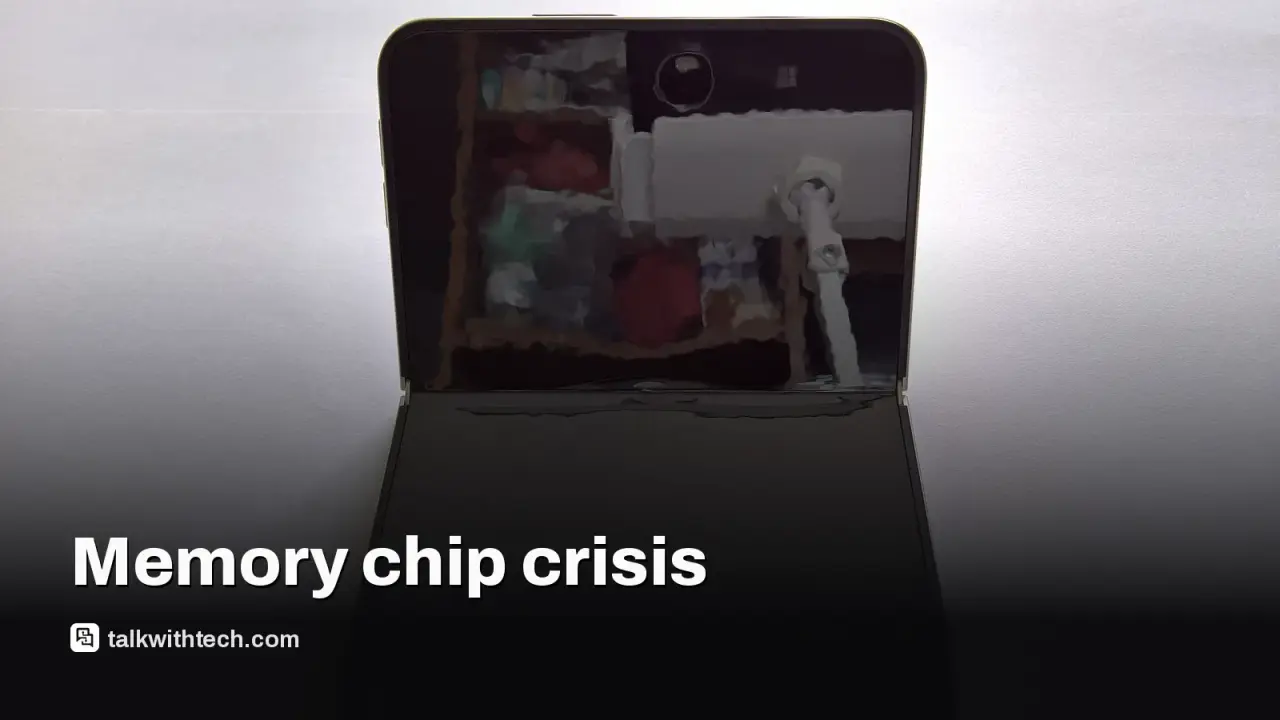
Apple memory chips crisis could affect iPhone Duo foldable timing
Apple chief executive John Ternus calls the memory chip shortage a crisis and says all options are on the table as the company tests Chinese memory, with potential spillover for upcoming devices.
Apple CEO John Ternus called the memory chip shortage a crisis in an interview with TIME, saying all options are on the table.
Reports claim Apple tested memory chips from a Chinese company, which has drawn attention from U.S. lawmakers and government warning on Chinese memory components.
The TIME piece notes the iPhone Duo, a foldable device, and mentions a patent filed in 2011 related to foldables; deliveries for this device have slipped to 2027.
Apple says parts where it can stand out while not relying on a single source for everything.
Quick read · 2 min
Apple says the global memory chip shortage is a crisis and is exploring all options, including testing a Chinese memory supplier. A TIME interview with CEO John Ternus notes that supply constraints could affect product timelines, including a foldable iPhone Duo that may not ship until 2027. Lawmakers and government warnings have added pressure to diversify supply. What this means for you: potential delays on new Apple devices and tighter supply choices in the coming months. What happens next: Apple will likely confirm supplier plans or timeline shifts in official statements.
The big question readers want answered: will this affect the iPhone Duo’s release window? At this stage, deliveries have been pushed to 2027 in the reporting, but Apple has not issued a public update. Stay tuned for official word as decisions firm up.
Apple is treating the global memory chip shortage as a crisis. In a TIME interview, Apple chief executive John Ternus said that all options are on the table as the company weighs how to source memory, including tests of a Chinese memory chip supplier. The comments come as lawmakers and the government have scrutinized any reliance on foreign memory components.
The broader context is simple: memory chips are a bottleneck for many technology products, and Apple has faced questions about where it sources its memory. TIME notes that a bipartisan group of U.S. senators asked Apple to clarify its plans, and government warnings about Chinese memory components have been reported as well. Apple confirms it is evaluating options, but officials say no final decision has been announced.
01
What Apple is saying officially
Apple has not confirmed any final supplier changes, but TIME quotes Ternus saying memory constraints are a real problem. He frames the issue as a risk to product timelines and the resilience of supply chains, rather than as a simple cost or design choice.
The interview emphasizes a foldable device called the iPhone Duo. TIME reports that the Duo starts at a high price point, and deliveries have been pushed into 2027. The device reportedly features a hinge with many micro-parts and a surface made from a custom polymer, illustrating how hardware complexity intersects with supply chain constraints.
03
Why this matters to everyday users
If Apple has to source memory from different suppliers, or delay devices because memory supply is constrained, the impact can show up as longer waits for new iPhones or foldables, and could influence future pricing or performance in AI features. For people waiting on new products, the timeline could shift again depending on how the company moves forward with components that influence speed, capacity and power usage.
04
The practical takeaway
There isn’t a firm plan the public can act on yet, but the situation highlights how global memory supply chains can ripple into product availability. If you’re eyeing the iPhone Duo or any future Apple device, you should expect potential delays beyond a typical update cycle and keep an eye on official statements from Apple as the company weighs its options.
Apple says they are evaluating options while trying to maintain product focus where it can stand out. The next updates will likely come as official statements or filings that confirm supplier choices or revised product timelines, especially for high-profile devices like the iPhone Duo.
06
Quick answers
What is the memory chip crisis about?
The company says memory constraints are a crisis, affecting supply and timelines for devices that rely on memory chips.
Is Apple definitely switching suppliers?
No final supplier decision has been announced. Apple is evaluating options, including tests with a Chinese memory supplier.
Texas says it has fixed a programming error in the driver’s license portal that delayed hundreds of thousands of voter registrations, prompting lawsuits from voting groups.