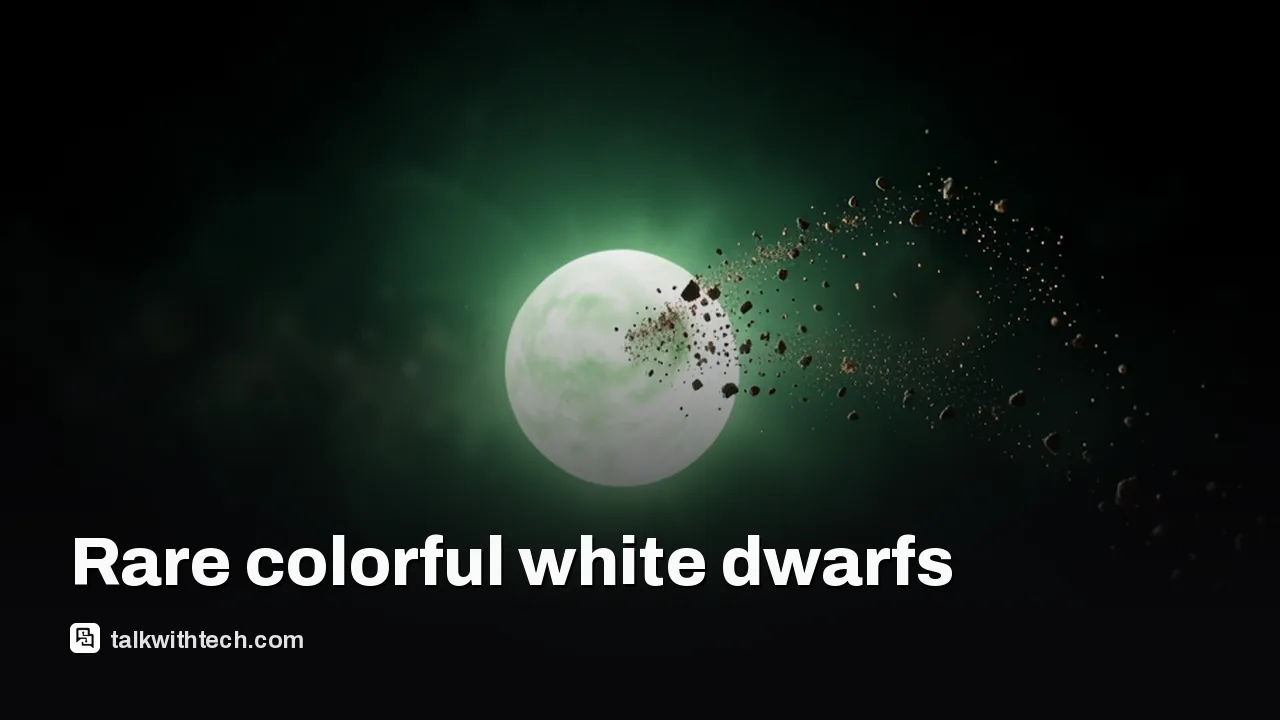
Researchers mapped colors of 151 white dwarfs and found most look white, but a few would appear cyan, yellow, purple, pink, or green to human eyes.
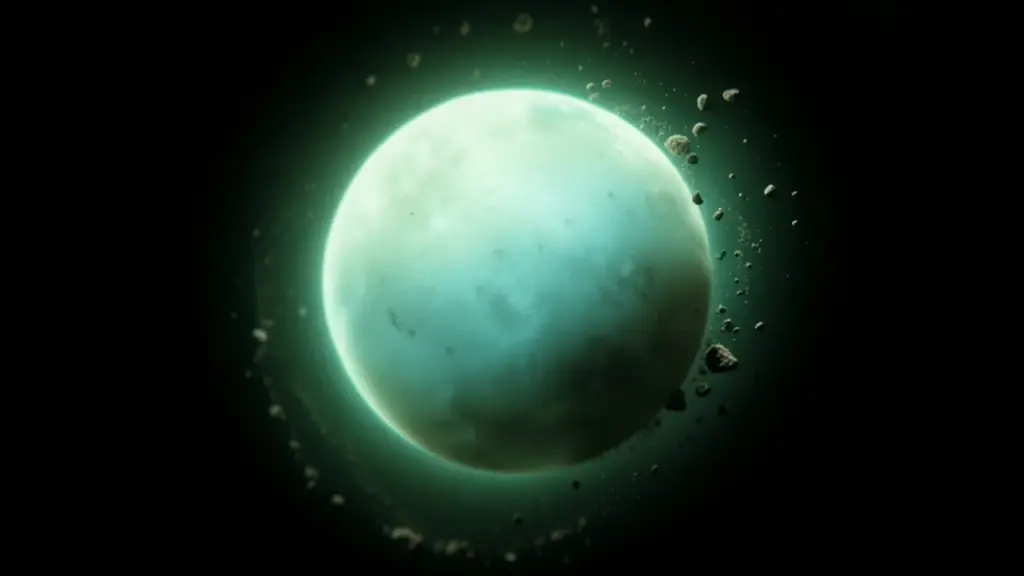
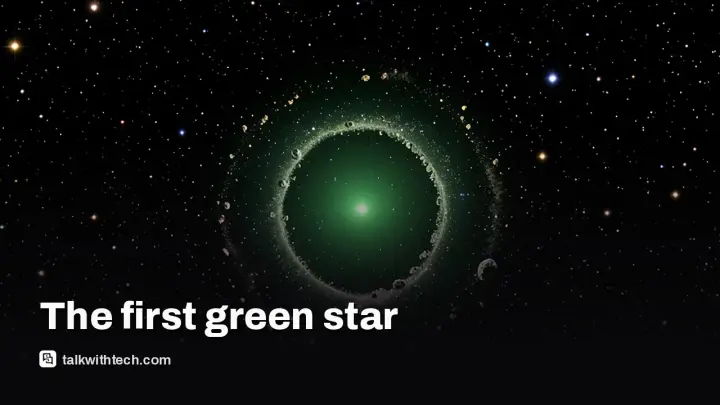
The green star, WD J1330+6435, is linked to a rocky planetary system whose debris nourishes trace elements in the star’s atmosphere, changing its color.
Color shifts occur as white dwarfs cool; colors drift as trace elements interact with the atmosphere and light.
Pink color in WDJ0902+2010 is tied to carbon generated inside the star, likely persisting for billions of years.
Quick read · 2 min
A white dwarf star would look green to the human eye, according to a new study. Researchers analyzed 151 white dwarfs and found most glow white, but some could appear cyan, yellow, purple, pink, or green depending on trace elements in their atmospheres.
The standout green star, WD J1330+6435, is linked to rocky planetary debris feeding the star’s atmosphere, tinting its light. Another interesting find is a pink star, WD J0902+2010, where internal carbon influences the color. These color changes aren’t permanent; as white dwarfs cool over millions of years, their colors shift toward white or orange again.
Why it matters: color isn’t just pretty. It reveals atmospheric chemistry and whether a star has recently interacted with planetary material. In the future, scientists hope to map how common these color shifts are and what they tell us about the fate of planetary systems.
The universe just served up a splash of color in the most unlikely place: a white dwarf star that would look green to our eyes. Scientists trained on 151 white dwarfs found that while many still glow white, some could take on hues you’d expect to see in a painter’s palette, cyan, yellow, purple, pink, and yes, green. It’s a reminder that even the oldest, most boringly named stars can surprise us with their appearance.
White dwarfs are the dense cores left behind when stars like our sun exhaust their fuel. They’re famous for emitting a steady, almost clinical white light. But this new study shows that when you look beyond straight temperature, the atmosphere and the trace elements floating around the star can tint the light in unexpected ways. The work used data from multiple white dwarfs and a simulation that translates the star’s light into human-visible colors.
The standout find is WD J1330+6435, nicknamed the green star. It’s not green because the star itself is green in the way a forest is green. It appears green because debris from a rocky planetary system is being pulled into the star, adding trace elements like calcium or metals to its helium-dominated atmosphere. Those trace elements absorb light in different parts of the spectrum, shifting what the star would look like to human eyes.
Another eye-catching result is a salmon-pink star, WD J0902+2010. Its atmosphere contains a lot of carbon, reshuffling how light comes off the star. The researchers say these pink hues are a consequence of carbon rising from inside the star and circulating through its outer layers.
While these colors are a neat scientific find, they aren’t permanent. White dwarfs start very hot and blue and cool over millions of years. As they cool, the trace elements and atmospheric conditions shift, so a star’s color can migrate back toward the white end of the spectrum over time.
So why does this matter for everyday stargazers or science nerds at home? It broadens how we interpret color from distant objects. Colors aren’t just about temperature; they reveal what’s in a star’s atmosphere and whether a star has recently accreted material from surrounding planets. That, in turn, hints at how planetary systems evolve long after their suns have burned bright.
01
Which white dwarfs changed color and why
The study looked at 151 white dwarfs and ran their observed data through a model that maps temperature to color as a human would perceive it. Most still look white at human scales, but five cases emerged with striking hues: cyan, yellow, purple or violet, pink, and green. The green WD J1330+6435 stands out as the first likely green star observed this way, tied to material from a rocky planetary system.
02
The science behind the colors
Color in these stars isn’t just about how hot they are. White dwarfs are incredibly dense, and their atmospheres can trap light in tricky ways. When you add trace elements absorbed from surrounding debris, those elements tint the spectrum. In WD J1330+6435, debris feeding the star shifts its color toward green. In WD J0902+2010, carbon in the atmosphere skews the light toward pink.
03
What this means for how we study the cosmos
Color tells astronomers something new about a star’s history. A green or pink hue hints at recent interactions with planetary material or unusual atmospheric chemistry. It’s a reminder that spectra and color are clues about the life story of these ancient remnants.
04
What happens next
Researchers will likely apply this color-mage technique to more white dwarfs, hoping to map how common such color shifts are and what they reveal about planetary systems around dead stars. The findings also invite us to reexamine how we interpret color data from far-off objects, especially when trace elements can dramatically alter what we see.