Saturday, 17 October 2026

Green star discovery: a dead star glows green from planet debris

Astronomers say a white dwarf loaded with sodium from shattered planets would look green to human eyes, and they found the reddest star on record too.

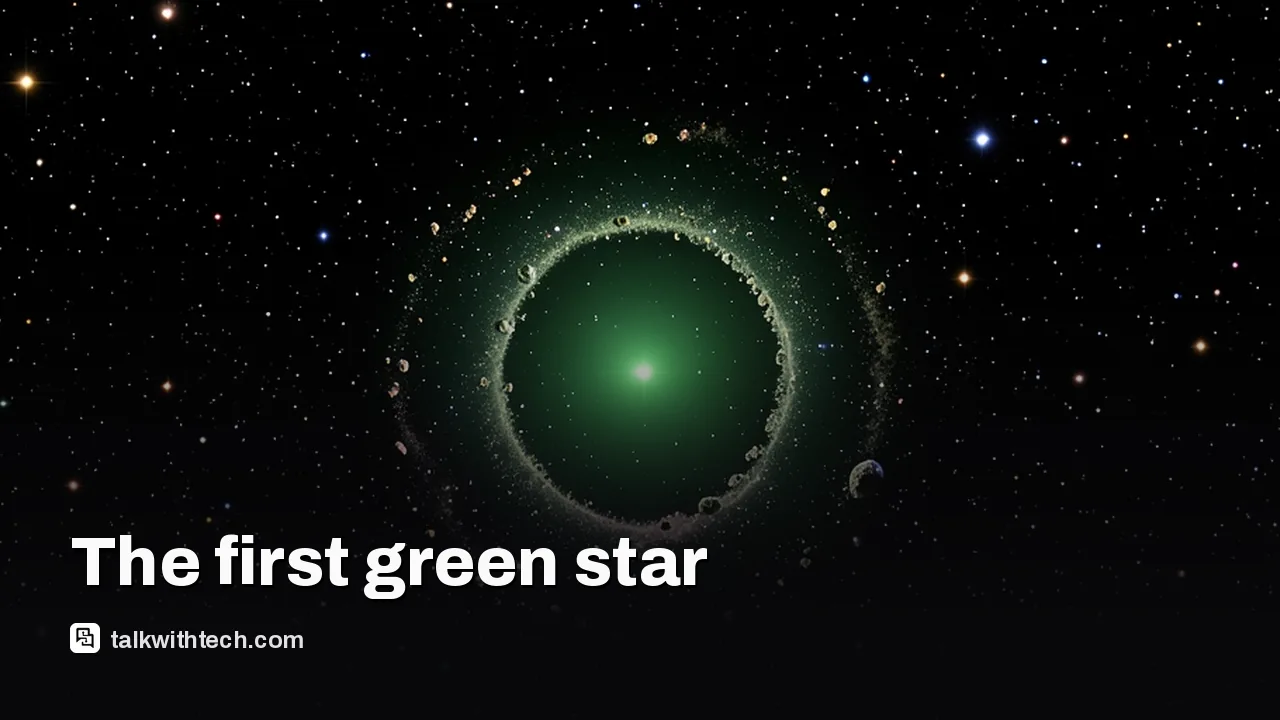
Space scene of a glowing green star circled by a ring of debris

The short version

  • Warwick astronomers say white dwarf WD J1330+6435 would look green, a first for any known star.
  • Sodium from rocky planetary debris in its dense atmosphere absorbs orange light and leaves a green glow.
  • The team also identified WD J1011+2845, 48 light-years away, as possibly the reddest star ever recorded.
  • About 1 in 30 white dwarfs show unusual colors, but the typical one really is white.
Quick read · 1 min

Astronomers at the University of Warwick say they've identified the first known green star. It's a white dwarf, the dense leftover core of a dead sun-like star, called WD J1330+6435.

Its color comes from rocky debris from its old planets. That material filled its very dense atmosphere with sodium, which absorbs orange light and leaves a green glow. You can't see it from Earth, though. The team calculated its color from its light spectrum using a model of human vision.

  • The same study found WD J1011+2845, 48 light-years away, may be the reddest star on record.
  • About 1 in 30 white dwarfs show unusual colors like pink, yellow or cyan.
  • The average white dwarf is still white, not blue as many assumed.

New sky surveys could turn up 10 or 20 more green stars in the coming years.

The green star discovery making the rounds this week centers on a dead star whose color comes from the rocky leftovers of worlds that once orbited it. Astronomers at the University of Warwick in England say the white dwarf WD J1330+6435 would look chartreuse green to a human eye, and no star before it has ever been credibly reported as green.

That sounds like trivia, but it breaks a rule taught in every beginner astronomy class: a star’s color tells you its temperature. The same team also found what may be the reddest star on record, and they estimate that roughly 1 in 30 white dwarfs shine in colors nobody expected.

01

Why stars are usually only orange, white or blue

Most stars follow a simple pattern, a bit like an electric stove coil that brightens as it heats up. The cool ones give off an orange tint, a star like our sun shines white, and the very hottest take on a pale blue hue. Astronomers call objects that behave like this perfect radiators, because their color depends almost entirely on how hot they are.

White dwarfs are what remains after a sun-like star burns through its fuel and its core collapses. Scientists assumed they followed the same rule. Lead researcher Mark Hollands, a Warwick Prize Fellow, says nobody had really checked what other colors were possible.

Observatory telescope dome open under a starry night sky
02

What makes the green star green

The answer is density. The atmospheres of the coolest white dwarfs can be about as dense as water, around 1 gram per cubic centimeter, which is millions of times denser than the visible surface of the sun. Packed that tightly, trace elements mixed into the star’s helium start absorbing light across a far wider range of colors than usual.

WD J1330+6435 has pulled in rocky debris from its old planetary system, which seeded its atmosphere with calcium, lithium and sodium. Sodium does the heavy lifting. It soaks up the orange part of the star’s light, and what’s left looks green. Hollands said picturing a green star in your sky feels like science fiction.

The star sits at about 4,000 degrees Celsius, or roughly 7,232 degrees Fahrenheit. Reports don’t agree on its distance: one puts it around 284 light-years from Earth, another around 326 light-years.
03

Can you see the green star from Earth?

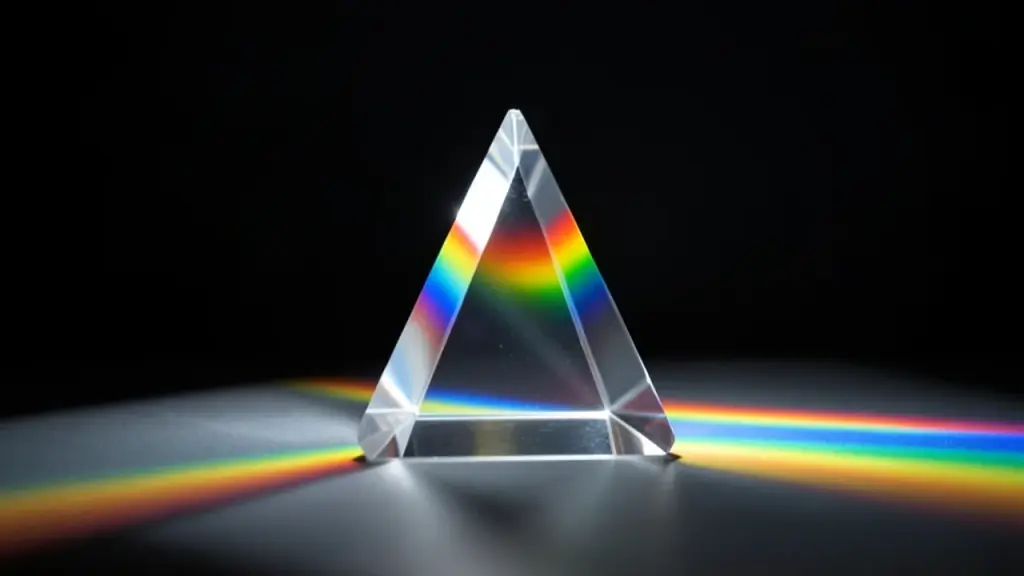
No, and that’s the catch. No white dwarf is close enough for its color to be seen directly. The team worked the colors out from spectra, the pattern you get when starlight is split up by wavelength, the same way a prism turns sunlight into a rainbow. They then fed those spectra into a model of how human eyes perceive color.

So the green is what your eyes would register if you could get close enough. It just isn’t something you’ll spot by stepping outside on a clear night.

Glass prism splitting white light into a rainbow spectrum
04

A rainbow of dead stars, and a very red one

When the team applied the method more widely, white dwarfs fell into color families based on what’s in their atmospheres:

  • Carbon-rich white dwarfs tend to look pink or purple.
  • Ones polluted by smashed asteroids and comets lean yellow.
  • Cooler ones with mixed hydrogen and helium take on a cyan or pale blue tint.

At the other extreme sits WD J1011+2845, just 48 light-years away. Carbon dredged up from its core pushes nearly all of its light beyond 600 nanometers, giving it a deep salmon-pink glow. It may be the reddest star ever recorded.

Of the 151 white dwarfs within about 65 light-years of Earth, only five had odd colors: two yellow and three pink. The typical one really is white, with a median color temperature near 6,800 Kelvin. That also corrects an old belief that white dwarfs are usually blue. Hot, blue ones are simply brighter and easier to spot from far away, so surveys catch more of them.

05

Why this matters beyond a pretty color

White dwarfs that swallow debris double as chemistry labs. When rocky material lands on one, astronomers can measure what it was made of, which offers clues to how planets around other stars formed. Adam Burgasser, an astronomer at the University of California San Diego who wasn’t part of the study, compared the work to piecing together evidence at a crime scene.

It’s also a peek at our own far future. The sun will become a white dwarf billions of years from now, though it would only turn green if it later pulled in rocky material the same way.

06

Quick answers

Where was the green star study published?

It appeared in the journal RAS Techniques and Instruments, with the work led by astronomers at the University of Warwick.

Will astronomers find more green stars?

Probably. Hollands expects new spectroscopic surveys to deliver about ten times more white dwarf spectra, which could raise the count of green ones from one or two to perhaps 10 or 20.

You're reading the quick version.