Saturday, 17 October 2026

Elon Musk: AI and robots solve US debt, not politicians

Elon Musk says only automation can bend the federal deficit, suggesting political cuts won’t come from leaders alone.

Elon Musk
Photo: Steve Jurvetson / CC BY 2.0 (modified)

The short version

  • Elon Musk told Walter Isaacson that the United States’ debt problem can only be addressed through AI and automation, not through spending cuts alone.
  • He argued most power holders are unwilling to trim programs, implying meaningful debt relief would require a president prioritizing deficit reduction.
  • The remarks are from an Axios-exclusive preview of The Builders podcast, which features conversations with tech leaders about the future of AI and society.
Quick read · 1 min

Elon Musk says AI and robots are the only way to address the US national debt. He shared this view in a preview of Walter Isaacson’s The Builders, arguing that spending cuts alone won’t come from current leaders.

Why it matters: automation could reshape government efficiency, jobs and services. The big questions are which programs get automated, how workers are supported, and how quickly changes happen.

What’s next: more conversations in The Builders with tech leaders, and potential policy signals if automation becomes central to budget thinking.
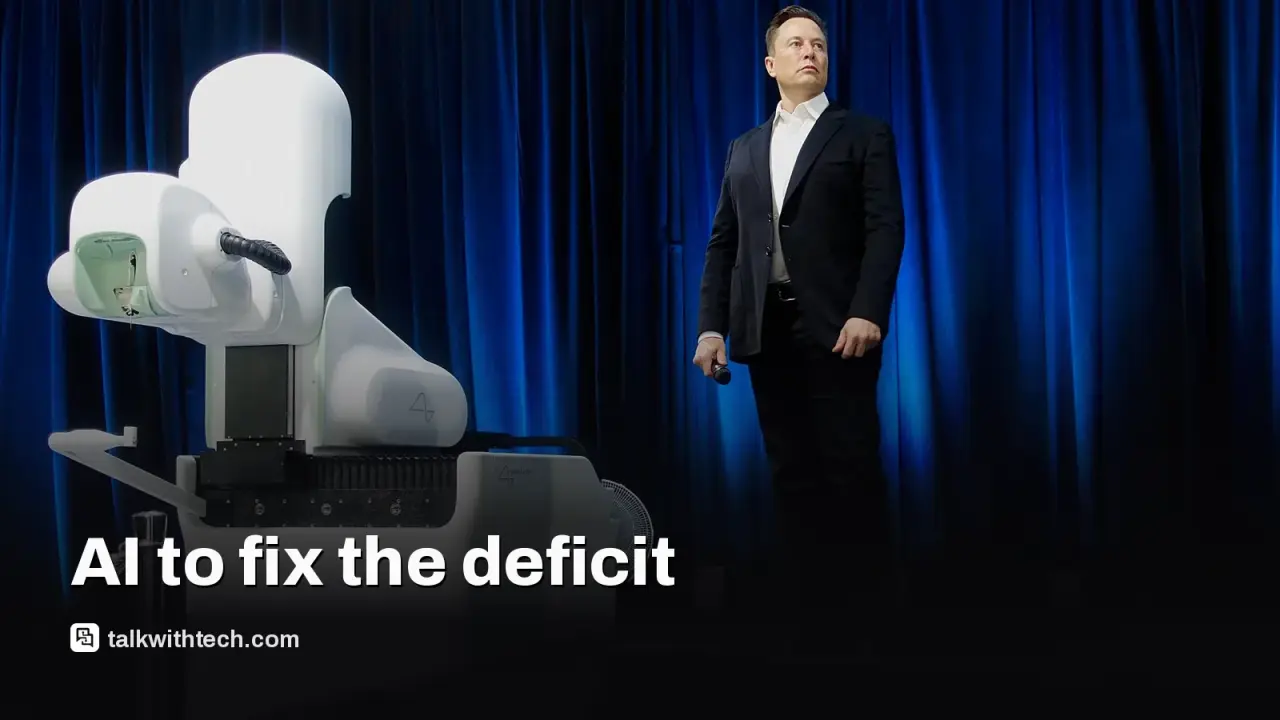

Elon Musk has a blunt take on how the United States should tackle its mounting debt: rely on AI and robotics. In a preview of Walter Isaacson’s new podcast The Builders, Musk says the national debt can only be solved through artificial intelligence and automation, not by “saving our way there.”

The claim is simple in phrasing but provocative in its implications: if government leaders are reluctant to cut spending, the scale of change would come from technology that could reshape how the economy runs. Musk argues that few people in power want to trim programs, suggesting that meaningful cuts would require a president who makes debt reduction a top priority. He even names a potential political accelerator, saying President Donald Trump would need to make debt relief his main goal for any real shifts to occur.

01

Where these words came from

The comments appear in an Axios-exclusive preview of Isaacson’s podcast The Builders. The show, which debuts on Tuesday, features conversations with tech figures about the future of AI and its impact on society. In this excerpt, Musk frames debt reduction as a challenge that political processes alone can’t fix, proposing AI and robotics as the catalysts for broader economic changes.

Studio microphone and recording setup for a podcast
02

Why this should matter to you

For most people, debt and deficits feel distant until they affect taxes, services or interest costs. Musk’s argument shifts the debate from budget tricks to how automation could reshape jobs and government efficiency. If AI and robotics become central to managing public finances, that could influence where money goes in policy, investment and how services are delivered in the coming years.

03

The tech angle here

More than a debt talk, this highlights a recurring tech theme: AI as a lever for broad economic change. It’s not about gadgets; it’s about how automation could alter how work gets done and how public programs are funded. Musk’s stance mirrors a wider conversation about automation driving efficiency, while also raising questions about what this means for workers who might be displaced.

Close-up of a person wearing headphones during a podcast
04

Power, politics and speed of change

Linking debt relief to automation ties policy decisions to tech investments. If a president or Congress leans on automation to trim costs, decisions about which programs to automate, where to invest and how to support workers become central. Key questions include which sectors would automate first, how displaced workers would be helped, and who pays for the transition’s speed.

05

What happens next

The Builders is rolling out new episodes, and Musk’s remarks are part of an ongoing conversation. Since this isn’t an official government plan, readers should treat it as a viewpoint in a developing debate. Look for formal policy signals or official statements from leaders or industry groups that outline how AI-driven efficiency could affect budgets and public services.

06

Quick answers

Is this a new policy announcement?

No. These are Musk’s personal views shared in an interview excerpt, not an official plan.

Will AI fix the debt overnight?

No. He describes AI and robotics as long-term levers that require political will and structural changes.

07

What you can do now

Keep an eye on how automation is being used in public services and budgeting. If this topic interests you, follow coverage of AI policy debates, automation pilots in government and any new studies on productivity and public costs.

You're reading the quick version.