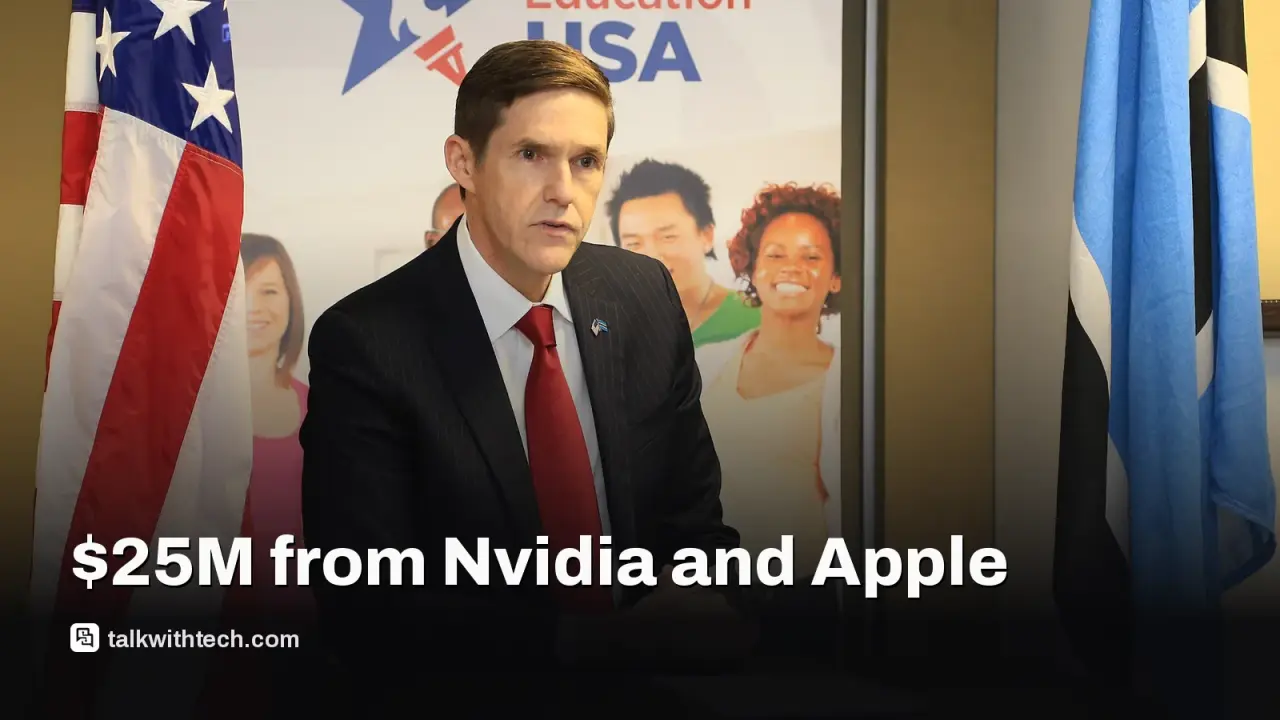
Nvidia Apple ballroom donations: both gave $25M to White House
A confidential donor spreadsheet shows Nvidia and Apple each contributed $25 million to a White House fundraising ballroom, part of a larger $333 million haul.
A confidential donor spreadsheet shows Nvidia and Apple each gave $25 million to the White House ballroom project.
The list accounts for 67 gifts totaling about $333 million, with Google contributing $22 million and many donors staying anonymous.
The donations highlight ongoing questions about private money influencing government spaces and priorities.
Quick read · 1 min
Two tech giants, Nvidia and Apple, each donated $25 million to a White House ballroom project, according to a confidential donor list analyzed by The Washington Post. The list totals about $333 million from 67 gifts, with Google at $22 million and many gifts kept anonymous.
Why it matters to you: private funding of public spaces can shape future policy choices and how government projects are overseen.
What happens next: expect more details on total costs, donor identities, and governance rules as officials release updates.
Two tech giants are listed among the top donors to a new White House ballroom project, each contributing $25 million. The figures come from a confidential donor spreadsheet that The Washington Post published, detailing 67 gifts of $10,000 or more that have come in through September and total roughly $333 million.
According to the document, Nvidia and Apple share the top tier of contributors, alongside the Adelson family and Charles Ergen, each with a $25 million gift. Google is listed with a $22 million contribution tied to a 2025 settlement related to its YouTube service. A sizable chunk of donations remains anonymous, accounting for about $77 million of the total. Trump has suggested the project is being funded largely by private individuals, though official figures on overall costs and donor names aren’t fully disclosed in every case.
The numbers matter beyond the ballroom itself because they illustrate how private money can attach to high-profile government spaces. For readers, the bigger question is what influence, if any, such funding might exert over public priorities, transparency, and oversight for future projects in Washington, D.C.
01
Who’s paying and why it matters
The donor list reads like a who’s who of big-name tech and corporate players, with Apple and Nvidia near the top. The reasons behind each donation aren’t spelled out in the document, and the donors haven’t issued a joint statement about the project beyond the gift itself. Still, the presence of such large checks in a ceremonial space in the nation’s capital raises important questions about how private interests intersect with public spaces and policy decisions.
02
The price tag and the mystery of the numbers
Public estimates of the ballroom’s cost have varied, with figures cited from around $200 million up to higher amounts in later reporting. The donor spreadsheet doesn’t pin down a final price. It does, however, reveal the scale of private involvement and the fact that many donors chose to remain anonymous, leaving gaps in the public ledger about who is funding what and how much.
03
What this means for ordinary readers
For most people, this isn’t a purchase price on a gadget. It’s a reminder that private dollars can flow into government spaces where policy and public visibility intersect. That matters because it can influence how future tech initiatives, AI programs, or data projects get funded and governed. It’s a signal to watch for how transparency and accountability are handled when private money backs public projects.
04
What happens next
Expect more clarifications on total costs, donor identities, and any governance rules that accompany the project. If new figures surface, we’ll report who gave how much and what oversight measures officials plan to use to keep the process transparent.
Nvidia and Apple each gave $25 million; Google contributed $22 million; many gifts are anonymous, and the total disclosed gifts run to about $333 million.
Why should I care as a reader?
Private funding of public spaces can shape priorities and oversight. It’s worth tracking who pays for publicly visible projects and what they get in return, if anything, beyond a ceremonial room.
What should I do with this information?
Look for official statements about total cost and donor governance as they become available. If you care about conflicts of interest or government transparency, follow updates from the White House about how such fundraising is overseen.
The Air Force is seeking a modular, open hardware upgrade for the F-16’s flight and mission computer, with room for GPUs and AI, to extend the jet’s life into the 2040s.
5 min read
We use cookies to understand how readers use Talk With Tech, so we can make it better. Is that OK? Privacy policy
The Daily Brief
Today's biggest tech stories, in 5 minutes
Every morning, the news that matters from AI, phones, apps and the people shaping tech. Explained in plain English. Free.
One email a day. No spam, unsubscribe anytime. Privacy policy