Surfing climate change: top 57 breaks face rising sea threats
A global analysis flags two key threats to famous breaks: sea-level rise and coastal development, reshaping surf economies and local cultures.
Talk With Tech Newsroom
The short version
A global analysis of 57 famous waves across eight countries finds most are at high risk due to sea level rise, shifting sediments, and coastal infrastructure.
Natural coastlines adapt better to change, while hardened barriers can reshape wave patterns and reduce break quality.
The change could impact not just surfers, but communities that rely on surf tourism and local economies.
Surfers’ local knowledge is emphasized as an important tool for monitoring changes and guiding protective actions.
Quick read · 1 min
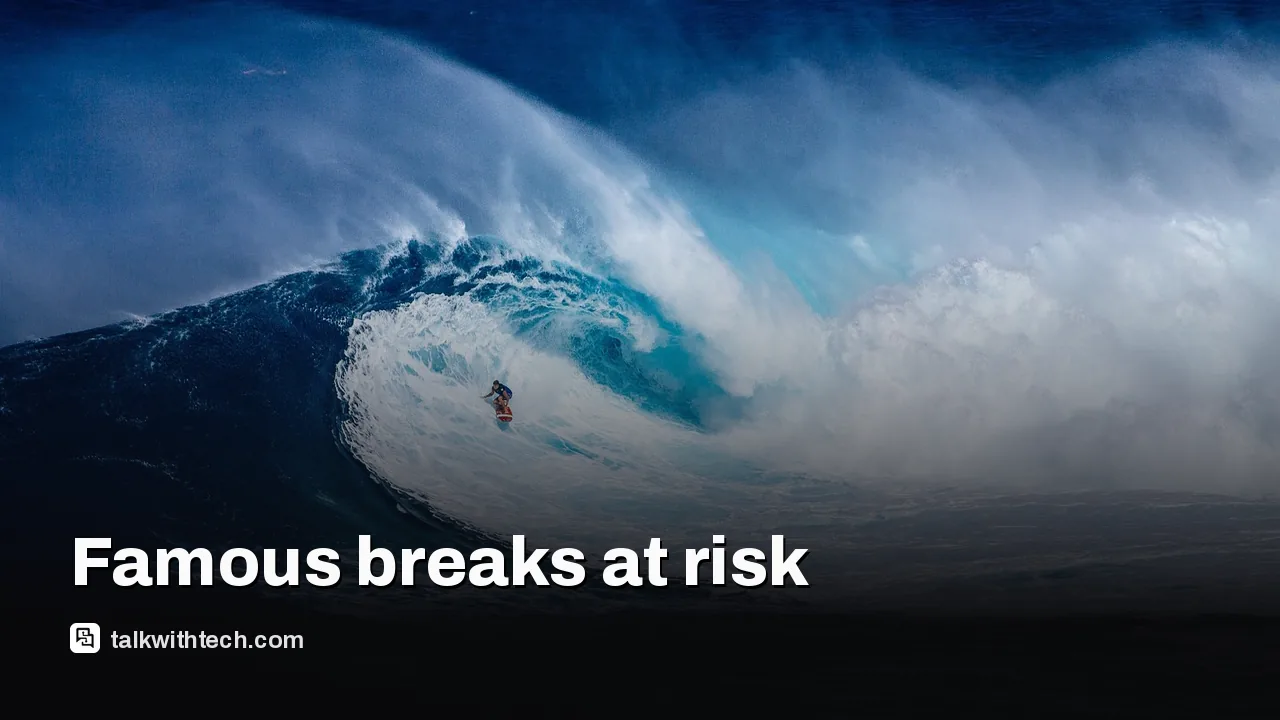
Rising seas and shifting coastlines threaten many of the world’s best surfing spots. A global study of 57 famous waves across eight countries finds most are at high risk from climate-driven changes in tides, sediment, and coastal defenses.
Why it matters to you: if you live near the coast or love surfing, this could change where you vacation, how you spend, and the health of local surf towns.
What happens next: scientists want more input from surfers and smarter coastal planning to preserve waves and protect communities. Look for updates on which breaks are most vulnerable and how local councils respond.
Economic ripple: surf tourism is a big deal for many coastal towns.
Natural coastlines adapt better than hardened shores that disrupt wave formation.
Local surfer knowledge could guide protective actions.
The world’s most iconic surf spots are increasingly fragile as climate change accelerates. A broad, international study examined 57 famous waves across eight countries and found that the vast majority sit in high-risk categories because rising seas, altered sediment movement, and coastal defenses are reshaping where and how waves form. The results echo what many coastal communities already sense when the swells don’t behave like they used to.
One of the core issues is sea-level rise. When the ocean climbs higher, it can push the boundary of where waves crash with the same punch and timing that locals expect. At the same time, changing rainfall patterns shift how sand and sediment move along shorelines. That movement can squeeze or stretch a beach, altering the very underwater contours that create great waves.
Coastal infrastructure adds another layer of complexity. Sea walls, groynes, and other hard structures can anchor a shoreline for people, but they often disrupt the natural flow of sediment and water that creates the perfect surfing conditions. In places where the coastline remains relatively natural, waves may migrate inland or shift in shape, sometimes preserving the break but in new forms. When development dominates the shore, the same waves can lose their signature power and shape, affecting both locals and visiting surfers.
The study underscores the social impact of these physical changes. Coastal towns that lean on surf tourism, training, competitions, and seasonal travel, could see shifts in when visitors come, how much money they spend, and how winter and shoulder seasons perform economically. For communities in places like the United States, United Kingdom, and Canada, that means recalibrating tourism calendars, real estate planning, and local events to reflect new wave realities.
Researchers also point to a practical takeaway: listening to long-time surfers who watch the ocean daily. Their on-the-ground observations about sand movement, reef health, and water depth can help scientists and planners spot trends sooner and design adaptive strategies before a famous break loses its appeal altogether. In short, local expertise matters as much as global climate data when steering protection efforts for cherished waves.
In the coming years, the story will unfold at the regional level as coastlines confront higher seas and stronger storms. The researchers urge governments, communities, and surf organizations to include surfers in planning discussions and to keep monitoring waves that define local identities and economies. The fate of many breaks may hinge on how quickly those partnerships translate climate science into policy and practice.