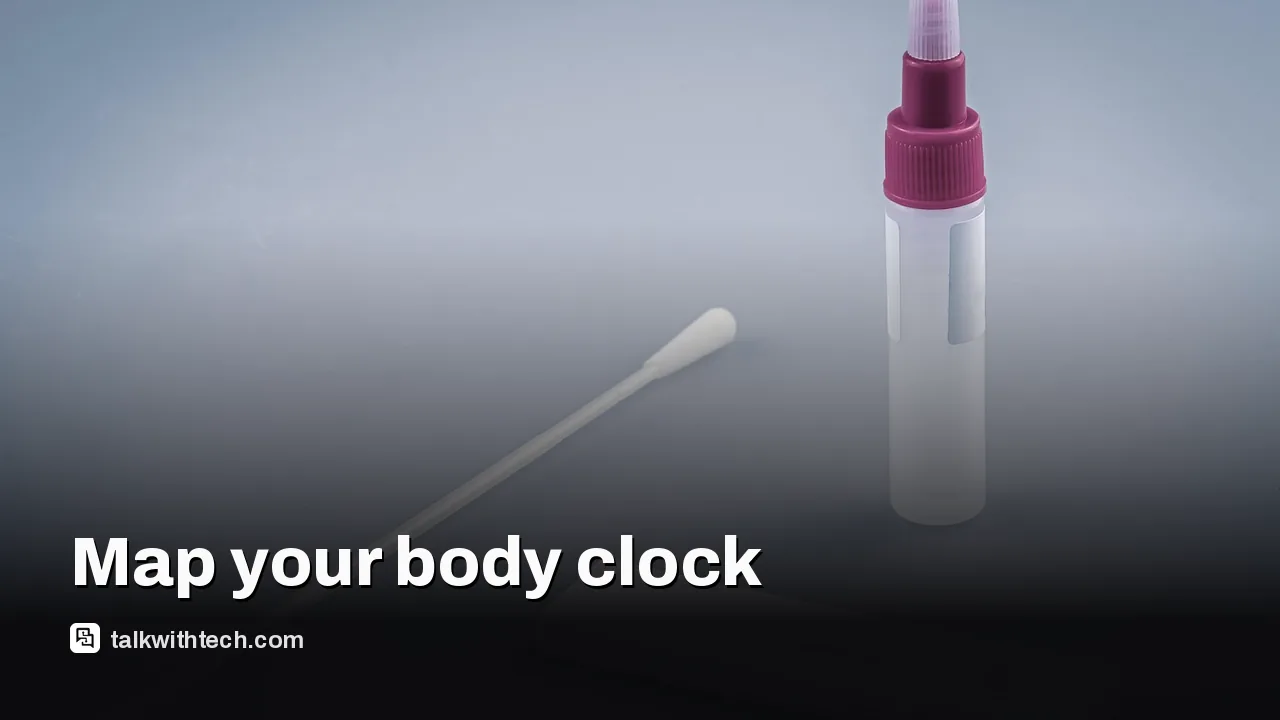
TimeTeller, a German startup now based in Hamburg, offers a saliva test intended to map an individual’s circadian rhythm.
CEO Angela Relógio argues that timing cancer treatments around a patient’s internal clock could reduce side effects and improve effectiveness.
The company moved from academia to a business with a working relationship with Techniker Krankenkasse for select cancer patients.
TimeTeller frames the test as a step toward precision medicine rather than a standalone diagnostic, with broader value emerging from clinical studies.
Quick read · 1 min
TimeTeller, a German startup, is selling a saliva test that maps your circadian rhythm to guide cancer treatment timing. The goal is to reduce side effects and improve effectiveness by syncing therapy with your body clock. The company has moved from a university setting to Hamburg and secured a reimbursement deal with a major insurer for a subset of patients. In the near term, the test is not a standalone diagnostic; its value will depend on ongoing clinical results. Expect more studies and broader coverage decisions in the coming months.
TimeTeller, a Berlin-origin startup now based in Hamburg, is betting that your body clock could be the key to smarter, gentler cancer care. The company has built a saliva test intended to map an individual’s circadian rhythm, the daily cycle that governs sleep, hormones and metabolism. The idea is simple in concept: if doctors know when your body is best prepared to tolerate certain treatments, they can time those therapies to reduce side effects and improve effectiveness.
CEO Angela Relógio, a physicist-engineer and molecular biologist, stresses that TimeTeller isn’t promising a one-size-fits-all solution today. The company frames its test as a stepping stone toward truly personalized medicine, where treatment decisions are informed by precise timing. Relógio describes the mission as two timelines: a shorter-term use of the saliva data to guide clinical studies and patient care today, and a longer-term goal of timing treatments for better tolerability and efficacy in cancer care.
TimeTeller’s journey from academia to a company began at Charité university hospital in Berlin and later moved to Medical School Hamburg. The move gave the team access to patients and new funding avenues. A key development is a partnership with Techniker Krankenkasse, one of Germany’s largest health insurers. The insurer started with reimbursement for the test for a subset of cancer patients and aims to expand coverage. That kind of payer support matters because it can influence how quickly doctors adopt the test in real-world care.
Relógio emphasizes that the test is not a standalone diagnostic tool. Instead, it’s a data source that can inform when certain medicines might be better tolerated or more effective, potentially improving outcomes in complex treatment regimens. The company positions TimeTeller as part of a broader shift toward precision medicine, where timing can influence how well a treatment works just as much as the drug itself.
What this means for patients today is both intriguing and uncertain. The test represents an exciting line of inquiry, but its real-world impact will depend on how clinicians use the data in conjunction with established treatments and ongoing clinical studies. TimeTeller’s approach mirrors growing interest in timing-based medicine, where biology guides decisions about when to treat and what to try next.
01
Who could benefit first
TimeTeller’s primary focus is cancer patients, with potential to extend to other conditions like metabolic or neurodegenerative diseases. The company’s mission centers on helping patients better tolerate and potentially improve the effectiveness of their treatments. Whether this translates into clearer benefits will depend on future clinical data and how insurers respond.
02
How reimbursement works today
The deal with Techniker Krankenkasse currently covers the test for a subset of cancer patients, with plans to broaden coverage. This matters because insurer backing can shape how quickly doctors incorporate the test into everyday care and how accessible it becomes outside trial settings.
03
What this could mean for everyday life
For people without cancer, the concept may feel abstract. The bigger takeaway is that our internal clocks might influence medical care more than we expect. If TimeTeller’s approach proves reliable, it could become a model for timing therapies, meals and routines to align with biology in health more broadly.
04
What happens next
TimeTeller plans to push forward with more clinical work to validate the timing concept across additional patient groups and treatments. Look for more data from studies and potential changes in coverage decisions as results come in. The company will likely continue partnering with clinicians and hospitals to weave rhythm data into treatment planning.
A saliva test designed to map a patient’s circadian rhythm to inform timing decisions for treatments, especially in cancer care.
Will insurance cover it soon?
Techniker Krankenkasse is already reimbursing the test for some cancer patients and aims to expand coverage, but widespread payer support will depend on more evidence.
NASA will preview U.S. spacewalks 100 and 101 to install the final roll-out solar arrays on the International Space Station, boosting power by about 30%.
NASA’s SPEARS project is developing solid-state batteries that can survive the Moon’s extreme temperatures, a step toward powering Artemis missions and space tech on Earth.
NASA’s Earth Observatory captured Simon near the Mexican coast as a Category 4 storm, with an uncertain path that could push it toward the Gulf of California.
4 min read
We use cookies to understand how readers use Talk With Tech, so we can make it better. Is that OK? Privacy policy
The Daily Brief
Today's biggest tech stories, in 5 minutes
Every morning, the news that matters from AI, phones, apps and the people shaping tech. Explained in plain English. Free.
One email a day. No spam, unsubscribe anytime. Privacy policy