watts on a Bluetooth speaker don’t directly equal loudness; the relationship is nonlinear.
RMS power tells you the sustained power a speaker can handle, not just peak bursts.
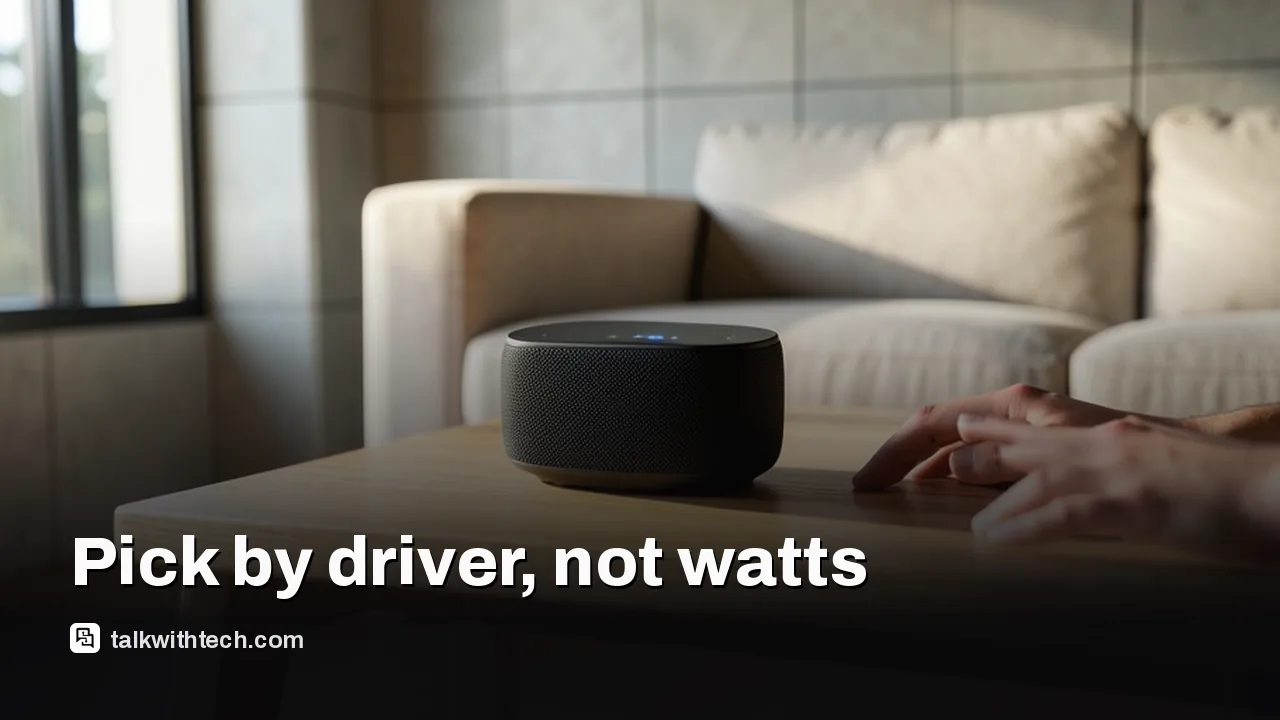
Driver quality, sensitivity and enclosure design matter as much as, or more than, wattage for real-world volume.
Quick read · 1 min
A lot of Bluetooth speaker hype centers on watts. But watts don’t map directly to loudness. You’ll see peak power and RMS power, peak is the max the amp can push in short bursts, and RMS is the continuous power the speaker can handle. Real-world loudness depends as much on driver design and enclosure as on wattage.
When shopping, look for RMS power, driver count, and independent real-world tests. For small rooms, sub-50W RMS is usually enough. For outdoor use, more drivers and a larger enclosure help, but don’t rely on peak watts alone. If you can, listen to models in person before buying.
RMS matters more for everyday listening
Driver design and enclosure shape loudness as much as watts
Read independent reviews for real-world tests
Next steps: compare RMS figures, check reviews, and audition models in your space before purchasing.
Turns out the wattage printed on a Bluetooth speaker box isn’t the whole story. Doubling the listed watts doesn’t double how loud the speaker sounds. That familiar math is a bit of a trap when you’re shopping for a portable or desk-friendly unit. In short, the same 20W rating you see on two different models can translate to very different listening experiences because other factors influence volume and sound clarity.
Two power figures usually show up: peak power and RMS power. Peak power is the maximum the amplifier can push for short moments. That number can look impressive, but it isn’t useful for understanding how the speaker performs over sustained listening. RMS, or root mean square, represents the continuous power the speaker can handle without distortion. A speaker might list 40W peak but only 20W RMS in real life. In many cases, the RMS figure isn’t shown at all, which makes comparisons tough.
Beyond power numbers, how loud a speaker actually gets depends on more than watts. The driver design, how efficiently the speaker converts electrical power to sound (sensitivity), and the enclosure can all have a bigger effect on perceived volume. An efficient 10W speaker can outperform a louder-looking 20W unit if its driver and cabinet design are better suited to your room.
So, what should you look for when buying a Bluetooth speaker? Start with RMS power as a baseline when it’s disclosed. Then consider the driver count and size, any stated sensitivity or efficiency figures, and the enclosure design. If you’re shopping online, look for independent reviews that test real-world loudness and distortion at modest and high volumes. And if you need something louder, remember that bigger speakers with multiple drivers, and sometimes more weight, often do a better job filling a room without pushing to max power.
Here are practical takeaways you can apply right away.
For small spaces like a kitchen or home office, a sub-50W RMS speaker is usually plenty.
For outdoor use or noisy rooms, prioritize higher RMS power and driver count, but don’t rely on peak watts alone.
Read real-world tests, not just the spec sheet, to see how the unit performs at comfortable listening levels.
Bottom line: wattage is a starting point, not the final arbiter of loudness. The best choice depends on how you’ll use the speaker and the room you’ll use it in.
01
Which numbers actually matter for everyday listening
The key figures to compare are RMS power when it’s listed, driver count and size, and any third-party review measurements of real-world loudness and distortion. If you can, listen to a few models in a store or at a friend’s house to hear the difference in room acoustics before you buy.
02
How to shop smart without getting fooled by peak power
Don’t be swayed by a model’s big peak power number alone. Look for models that provide both peak and RMS figures or, at minimum, a reputable independent review that reports real-world performance. And prefer units with more drivers or a larger, well-designed enclosure if you need to fill a room with sound.
03
What this means for your wallet
While you’ll sometimes see very high wattage in premium speakers, the price isn’t always tied to how loud they get. Understanding the real-world performance will help you avoid overpaying for a spec sheet that looks exciting but doesn’t translate to better listening in your space.
04
What happens next
If you’re in the market, check for RMS ratings, read independent tests, and, if possible, audition two or three models in your home environment before deciding.
Not necessarily. For small rooms, a speaker with solid RMS performance and good driver design usually sounds better than a louder-but-poorer option.
Is peak power useless?
Not useless, but it’s not the number to judge everyday performance. Use it for brief bursts; RMS is your guide for regular listening.
Should I buy a bigger speaker to fill a large room?
Often yes, but equally important is the speaker’s design and the room’s acoustics. Two smaller quality speakers can outperform one loud, poorly designed unit.
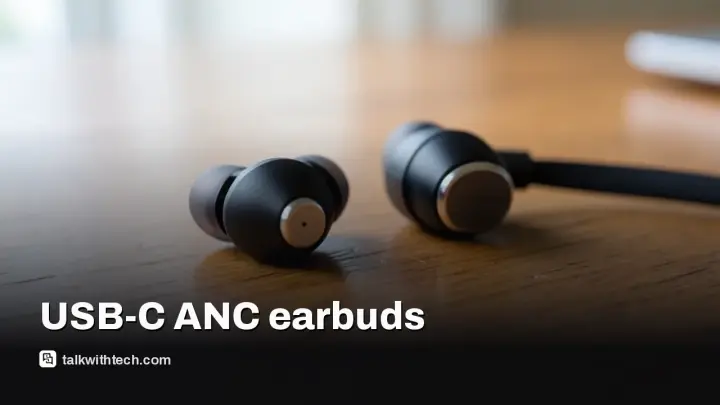
Bose returns to a familiar cord with USB-C wired earbuds that include active noise cancellation and high-res audio, offering a simple, lag-free alternative to wireless.
5 min read
We use cookies to understand how readers use Talk With Tech, so we can make it better. Is that OK? Privacy policy
The Daily Brief
Today's biggest tech stories, in 5 minutes
Every morning, the news that matters from AI, phones, apps and the people shaping tech. Explained in plain English. Free.
One email a day. No spam, unsubscribe anytime. Privacy policy